Keeping indoor plants healthy requires protection from a range of persistent pests. Systemic insecticides, absorbed by the plant and defending roots to new growth, offer long-lasting protection with minimized risk to beneficial insects. This guide highlights five highly relevant options designed to shield container plants from aphids, mealybugs, scale, fungus gnats, and more. Each product below is evaluated for indoor use, duration of protection, and how it delivers active ingredients. Use as directed to balance pest control with plant vigor and indoor air quality.
| Product | Brand | What It Targets |
|---|---|---|
| Bonide Systemic Houseplant Insect Control | Bonide | Mealybugs, aphids, scale, more |
| Bonide Houseplant Systemic Insect Control Granules | Bonide | Aphids, whiteflies, fungus gnats, more |
| Bonide Product 951 Systemic House Plant Insect Control | Bonide | Mealybugs, aphids, scale, more |
| Bonide Systemic House Plant Insect Control Granules (4-Pack) | Bonide | Fungus gnats, aphids, whiteflies, etc. |
| Organic Insecticide Liquid Concentrate – Plant Spray | ARBER | Fungus gnats, aphids, whiteflies, spider mites |
Note: Each option has its own strengths, including ready-to-use granules for quick setup, multi-pack value, or a liquid concentrate for flexible dilution. All selections focus on indoor compatibility and consumer-friendly application, helping you tailor pest control to plant type, potting conditions, and maintenance routines.
Bonide Systemic Houseplant Insect Control

This ready-to-use granule formula is designed for containerized indoor plants and provides systemic protection for up to eight weeks after application. The product is absorbed through the roots and travels within the plant to combat pests that feed on plant tissue. It is formulated to be low odor and is effective against common houseplant pests such as mealybugs, aphids, and scale. Note that it targets pests that feed on the plant and will not harm insects that do not feed on plant tissue.
Bonide Houseplant Systemic Insect Control Granules 8oz
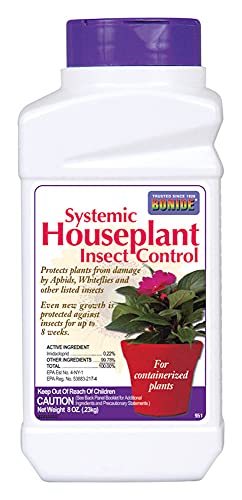
These 8-ounce granules are specifically formulated for indoor use and provide systemic insect control that helps protect houseplants from a range of pests. The product aims to reduce populations of aphids, whiteflies, fungus gnats, and other common invaders while supporting overall plant health. It’s designed to be mixed into the soil to enable root uptake and sustained protection, with emphasis on long-lasting results.
Bonide Product 951 Systemic House Plant Insect Control

Product 951 combines low-odor ready-to-use granules with systemic action designed for indoor plants. It protects against typical container plant pests while promoting root development and bloom potential. Insects that feed within plant tissues are targeted through ingestion, with a clear emphasis on durability against re-infestation for weeks after treatment. Similar to other Bonide formulations, it’s designed to resist washing off during routine watering and provides ongoing protection for treated plants.
Bonide Systemic House Plant Insect Control (4-Pack)

This pack provides four 8-ounce bags of systemic granules, delivering long-lasting protection for eight weeks and ongoing protection for new growth. It targets a broad spectrum of pests including fungus gnats, mealybugs, whiteflies, and aphids through ingestion. As with other Bonide options, the formulation focuses on indoor use with a low odor profile and a capability to defend developing foliage and roots from infestation. The multi-pack format suits households managing several plants or large collections.
ARBER Organic Insecticide Liquid Concentrate

This organic liquid concentrate provides fast-acting control for internal and external infestations, eliminating fungus gnats, aphids, whiteflies, mealybugs, and spider mites on contact and offering residual protection for leaves. It uses organic biologicals to disrupt pest life cycles while supporting a balanced microbiome to promote healthy root systems. The formula is highly dilutable, allowing customization for seedlings, herbs, roses, and shrubs. It’s a flexible choice for those seeking an organic approach without synthetic residues.
Buying Guide
Key considerations help buyers select the best systemic insecticide for indoor plants:
- Active ingredient and pest spectrum: Identify which pests you’re targeting (aphids, fungus gnats, mealybugs, scale) and choose products with proven activity against those pests. Some options emphasize ingestion-based kill, others rely on systemic movement within the plant.
- Indoor usability: Prioritize formulations labeled for indoor use, with low odor and minimal risk to humans, pets, and pollinators when used as directed.
- Application method: Granules absorbed through roots provide gradual protection and are convenient for larger collections. Liquid concentrates offer dilution flexibility for different plant sizes and setups.
- Protection duration: Look for products offering multi-week protection and protection of new growth, especially in actively growing houseplants.
- Impact on plant health: Some products promote robust root systems and blooms while controlling pests; others are primarily focused on pest suppression. Consider your plant species and growth stage.
- Re-application strategy: Systems vary in how quickly they require re-application. Follow label guidelines to avoid potential phytotoxicity or reduced efficacy.
- Compatibility with preventive care: Combine systemic treatments with cultural practices (quarantine of new plants, careful watering, sanitation) to minimize pest pressure.
- Cost and value: Multi-pack options can reduce cost per plant, but ensure you have an appropriate number of affected plants to maximize value without waste.
- Organic vs. synthetic: Organic concentrates and plant-safe formulas provide alternative routes for gardeners prioritizing natural methods, though they may differ in spectrum and speed of action.
When selecting a product, verify the pest targets, application method, and the indoor-use label to ensure suitability for your houseplant collection. Always follow the manufacturer’s directions for dilution, application timing, and safety precautions to protect both plants and household members.