Powdery mildew can threaten cannabis health and yields. The right powdery mildew spray helps protect leaves, buds, and stalks while staying compliant with organic gardening standards where needed. This guide reviews five trusted options that target powdery mildew and related pathogens, balancing effectiveness with safety for indoor and outdoor grows. Each product below is evaluated for coverage, ease of use, and compatibility with home cultivation practices.
| Product | Brand | Type | Notes |
|---|---|---|---|
| Grower’s Ally Fungicide Spray | Grower’s Ally | Ready-to-use fungicide | OMRI Listed, acts as a preventative and curative spray |
| Grower’s Ally Crop Defender 3 | Grower’s Ally | Triple-action spray (miticide, insecticide, fungicide) | For weekly preventative use against mildew and pests |
| Grower’s Ally Crop Defender 3 Concentrate | Grower’s Ally | Concentrate spray | Makes 100 gallons; versatile for larger setups |
| FortaGrow Plant Disease Control Spray | FortaGrow | Natural fungicide spray | Thyme oil-based, pet- and family-friendly |
| ARBER Organic Fungicide (Roses & Flowers) | ARBER | Biological fungicide with Bacillus amyloliquefaciens | Ready-to-spray, supports bloom protection |
The following sections detail each product, including how it works, suitable uses, and notable advantages. All products are evaluated for cannabis-friendly application practices, though users should always follow label directions and local regulations.
Grower’s Ally Fungicide Spray: Ready-To-Use

This ready-to-use fungicide targets powdery mildew along with other common plant pathogens. It’s designed for both indoor and outdoor application, providing a protective barrier that helps prevent mildew development on leaves and stems. The formula is soil- and plant-friendly, focusing on citric acid chemistry to minimize residue concerns. It is OMRI Listed and FIFRA 25(b) exempt, aligning with organic gardening practices where applicable. Applicability spans cannabis foliage, ornamentals, vegetables, and fruiting plants, making it a versatile option for mixed-grow setups.
Key features include a broad-spectrum approach to powdery mildew and related diseases, a plant-safe profile, and a preventative mode of action. Users may choose to apply preventatively during high-humidity periods or at the first sign of mildew to reduce spread. Always test on a small area before broader use and follow label directions for timing between sprays and any required intervals.
Grower’s Ally Crop Defender 3: Triple-Action Spray

Crop Defender 3 is a triple-action spray designed to combat powdery mildew and other threats while offering miticide and insecticide properties. This product uses a synergistic blend of botanical oils and a built-in surfactant to improve coverage and pest control. It’s positioned for weekly use as a preventative measure as well as a curative spray for mildew on contact. The OMRI-listed formulation emphasizes organic gardening compatibility with a focus on reducing residue and heavy metals.
For cannabis cultivation, Crop Defender 3 can be particularly helpful during stages when pests and mildew commonly occur together, such as during dense canopy growth and flowering. The product is spray-on and ready to apply, which reduces handling steps in tight grow rooms. As with all broad-spectrum products, growers should apply according to label directions and consider rotating products to minimize resistance risk.
Grower’s Ally Crop Defender 3 Concentrate
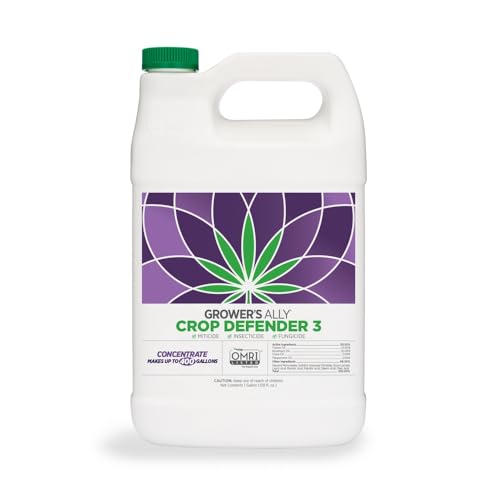
This concentrate version yields up to 400 gallons, offering cost efficiency for larger cannabis grows or multiple rooms. It shares the same triple-action concept—miticide, insecticide, and fungicide—delivering broad coverage against powdery mildew, mites, and other soft-bodied pests. The formula emphasizes zero pollutants, being FIFRA 25(b) exempt and OMRI Listed, which helps maintain organic cultivation standards while providing effective disease and pest control. Proper mixing and compatibility with existing spraying schedules are essential for optimal results.
Additionally, the concentrate form reduces handling frequency, aiding compliance with sanitation protocols in grow facilities. When applying to cannabis, ensure even coverage on both upper and lower leaf surfaces and avoid spraying during intense light or heat to minimize leaf stress. Always store concentrates securely and use in a well-ventilated area during mixing and application.
FortaGrow Plant Disease Control Spray

FortaGrow offers a thyme oil-based natural fungicide that targets powdery mildew, botrytis, and other foliar diseases. The plant-derived active ingredient provides a contact-kill and preventative barrier, with a focus on safety for indoor use. This product is positioned as family and pet-friendly when used as directed, making it a suitable option for home growers who want a more natural approach without harsh chemicals. It’s designed for both indoor and outdoor applications on a range of plants, including cannabis, though label guidance should be followed strictly for any edible or smokeable crops.
Consider FortaGrow as part of an integrated disease management plan: rotate with other modes of action, monitor humidity and airflow in grow spaces, and apply at the first signs of mildew to curb spread. The thyme oil base may have a distinct aroma and immediate surface effect, so plan applications around routine house activities if used indoors.
ARBER Organic Fungicide for Roses & Flowers

ARBER’s organic fungicide uses Bacillus amyloliquefaciens F727 to outcompete pathogens on leaf surfaces, forming a protective bio-shield that strengthens natural plant defenses without harsh synthetic chemicals. The ready-to-spray 16-ounce bottle covers up to about 2,500 square feet, with practical application on leaves and stems of roses, flowers, and similar ornamentals. For cannabis, ARBER can be considered a supplementary option focusing on organic compatibility and soil- and foliage-friendly disease management, though always verify label guidance for cannabis-specific use and any restrictions in your region.
This product emphasizes an environmentally conscious approach, reducing chemical residues while supporting bloom health. Its microbial mechanism offers a different mode of action relative to citric-acid or synthetic fungicides, providing a complementary option for integrated pest and disease management in diverse grow settings.
Buying Guide: Key Purchase Considerations For Powdery Mildew Control
- Active ingredient and mode of action: Powdery mildew sprays use various mechanisms—citric acid, botanical oils, essential oils (thyme), or beneficial microbes. A rotation plan helps prevent resistance and broadens disease coverage.
- Organic vs. conventional: OMRI-listed or FIFRA 25(b) exempt products align with organic growing standards. Consider your compliance needs and whether a natural approach matches your cultivation goals.
- Target scope: Some products are broad-spectrum (miticide, insecticide, fungicide), while others focus specifically on fungal diseases. Choose based on pest pressure in your grow space.
- Application and coverage: Ready-to-use sprays offer convenience; concentrates require mixing and may cover larger areas. Ensure compatibility with indoor equipment (fans, dehumidifiers) and spray equipment.
- Safety and labeling: Always follow label directions for indoor use, including ventilation, protective gear, and restricted harvest intervals. Some products may have aroma or plant tissue considerations that affect cannabis tolerances.
- Cannabis-specific considerations: Check local regulations and product labels for cannabis use. Some products may be suitable for ornamentals but not approved for cannabis or edible crops; when in doubt, choose products explicitly labeled for cannabis or consult a licensed grow shop.
- Integrated disease management: Combine sprays with cultural practices—airflow optimization, humidity control, sanitation, and canopy management—for better mildew prevention and reduced reliance on any single product.
In summary, selecting a powdery mildew spray for cannabis involves weighing organic compatibility, breadth of pathogen coverage, ease of use, and adherence to local cannabis regulations. The products listed here provide diverse options—from ready-to-use plant-safe fungicides to triple-action formulations and biologically-based fungicides—allowing growers to tailor disease management to their grow environment and cultivation philosophy.