If you’re growing vegetables, herbs, or flowers in raised beds, choosing the right organic soil is essential for strong roots and steady yields. This guide highlights five top organic soils designed for raised beds, with key features, benefits, and practical considerations for American gardeners. Each option supports soil life, nutrient availability, and moisture management to help plants thrive through fluctuating seasons.
| Product | Brand | Core Benefit | Ideal For |
|---|---|---|---|
| Espoma Organic Raised Bed Mix | Espoma | Mycorrhizae and organic nutrients | Vegetables, herbs in raised beds |
| FoxFarm Raised Bed Planting Mix | FoxFarm | Moisture retention with earthworm castings | Vegetables, flowers, fruits, herbs |
| Miracle-Gro Organic Raised Bed & Garden Soil | Miracle-Gro | Quick-release natural fertilizer, peat-free | Raised beds, continuous feeding |
| True Organic Raised Bed Food | True Organic | Premium organic ingredients for long nourishment | Herbs, vegetables, fruits in raised beds |
| Wakefield Biochar Blend | Wakefield Biochar | Biochar for water and nutrient retention | Raised beds, containers, garden soil |
Note: This overview focuses on organic or highly natural formulations tailored for raised beds. When selecting soil, consider your climate, bed size, water availability, and the crops you plan to grow. The following sections summarize five top options with their noteworthy features and practical usage tips.
Espoma Organic Raised Bed Mix

Espoma’s Organic Raised Bed Mix is crafted for raised garden beds and outdoor containers. It features a rich blend of natural organic ingredients enriched with earthworm castings, alfalfa meal, kelp meal, and feather meal, plus MYCO-TONE mycorrhizae. This combination promotes soil biology and nutrient uptake, supporting robust root systems in vegetables and herbs. Use as a stand-alone mix or as a top-dressing layer to refresh soil health between crops. The bag size is convenient for mid-range beds and ongoing seasonal use.
FoxFarm Raised Bed Planting Mix

FoxFarm’s Raised Bed Planting Mix is a ready-to-use garden soil blend designed for raised beds and containers. It emphasizes moisture retention while ensuring drainage, with earthworm castings and oyster shell to support soil biology and calcium availability. The formula is suitable for vegetables, herbs, fruits, and flowers, making it a versatile option for mixed beds. No additional mixing is required—simply pour and cultivate.
Miracle-Gro Organic Raised Bed & Garden Soil
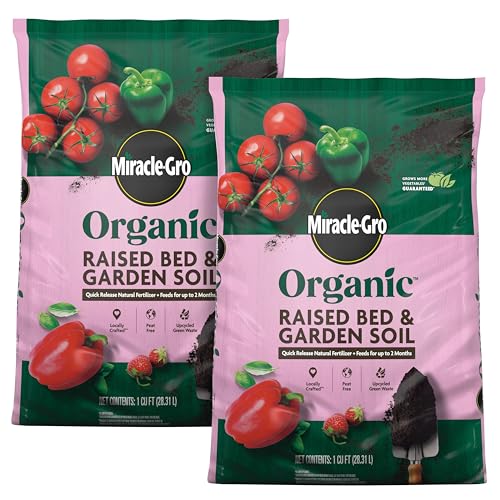
Miracle-Gro Organic Raised Bed & Garden Soil blends peat-free organic material with quick-release natural fertilizer, feeding plants for up to two months. It is formulated from upcycled green waste and designed for raised beds, containers, and garden plots. This soil aims to provide an immediate nutrient boost while supporting longer-term soil structure and plant vigor, appealing to gardeners who want a reliable, peat-free option that reduces synthetic inputs.
True Organic Raised Bed Food

True Organic Raised Bed Food is optimized for raised beds and large containers, featuring a premium blend of seabird guano, shrimp and crab shell meal, and other proven nutrients. The formulation supports consistent nourishment with easy application every two months during the growing season, delivering sustained fertility without synthetic additives. This product is well-suited for gardeners seeking a nutrient-dense organic option to maintain soil vitality through multiple crops.
Wakefield Biochar Blend

Wakefield Biochar Blend with CarbonBoost Technology uses premium biochar to enhance aeration, reduce compaction, and boost microbial activity. The blend improves water and nutrient retention—potentially reducing watering frequency by up to 50%—while supporting root growth and overall plant vigor. Its bio-active probiotic and mycorrhizae components help build a thriving soil ecosystem, making it a strong option for nutrient-densitive crops in raised beds.
Buying Guide
Key purchase considerations include:
- Soil structure: Look for mixes with balanced organic matter, perlite or vermiculite for aeration, and compost or worm castings for nutrients.
- Moisture management: Choose blends that provide moisture retention without waterlogging, especially in dry climates or hot summers.
- Soil biology: Mycorrhizal fungi, beneficial microbes, and worm castings support nutrient uptake and plant health.
- Fertilizer timing: Some soils include quick-release fertilizers; others rely on slow-release organics. Align with your planting schedule.
- Peat-free options: If you prefer peat-free formulations, note products labeled as peat-free or using alternative organic media.
- Crop compatibility: Ensure the mix suits your target crops (vegetables, herbs, or flowers) and your bed dimensions.
- Environmental impact: Consider sustainably sourced ingredients and OMRI-listed certifications when applicable.
- Maintenance: Some blends require less ongoing input, while others benefit from regular top-dressing or compost additions.
Practical guidance: For fastest results, start with a high-quality raised bed mix for initial bed filling, then amend yearly with compost or worm castings to maintain soil vitality. In areas with heavy rainfall, ensure good drainage by incorporating perlite or sand as needed. For container-adjacent raised beds, choose blends designed for containers to maximize drainage and root space.