This guide rounds up compact greenhouses that excel at growing vegetables in tight spaces. Each option balances sturdy construction, light transmission, and practical features to shield vegetables from frost and pests while still letting in ample sunlight. The selections below emphasize portability, ease of assembly, and affordability, helping urban and suburban gardeners extend growing seasons without sacrificing space.
Summary of chosen products
| Product | Brand | Key Benefit | Approx. Size |
|---|---|---|---|
| Ohuhu Mini Greenhouse | Ohuhu | Four-tier shelf system with durable PE cover | 62″ x 27″ x 20″ |
| WUKHG 6×4FT Small Greenhouse | WUKHG | Aluminum frame with polycarbonate panels for weather resistance | 6′ x 4′ x 4′ (approx.) |
| Miracle-Gro 4’8″ x 4’8″ x 6’5″ Walk-in | Miracle-Gro | Walk-in design with sturdy steel frame and clear PVC cover | About 4’8″ x 4’8″ x 6’5″ |
| Home-Complete 2-Tier Mini | Home-Complete | Compact, portable two-tier shelving for trays and pots | 27″ wide |
| Purlyu 4-Tier Garden Greenhouse | Purlyu | Four sturdy shelves with clear PVC cover | 27″ wide, 14″ height spacing |
Ohuhu Mini Greenhouse For Indoor Outdoor

The Ohuhu Mini Greenhouse features a four-tier rack with a durable polyethylene cover and an overall footprint that fits compact spaces. Each shelf can support up to 22 pounds, with patented fixed clips for stability. The design emphasizes light transmission and weather resistance, including UV protection and corrosion-resistant tubes. A roll-up zippered door enables easy access and improved air circulation, while screened ventilation helps deter small animals. This model suits seedling trays and small to mid-sized vegetable starts, offering a simple way to extend the growing season in apartments, balconies, or patios.
WUKHG 6×4FT Small Greenhouse

This model centers on a sturdy aluminum frame paired with polycarbonate panels to withstand wind, rain, and cold. The panels are UV resistant and designed to maintain humidity and temperature for vegetable growth. Adjustable ventilation windows and a lockable door provide controlled airflow and security for tender transplants. The assembly emphasizes durability and long-term outdoor use, making it a robust option for gardeners who plan to grow a wider range of vegetables in a dedicated outdoor space.
Miracle-Gro 4’8″ Walk-in Greenhouse
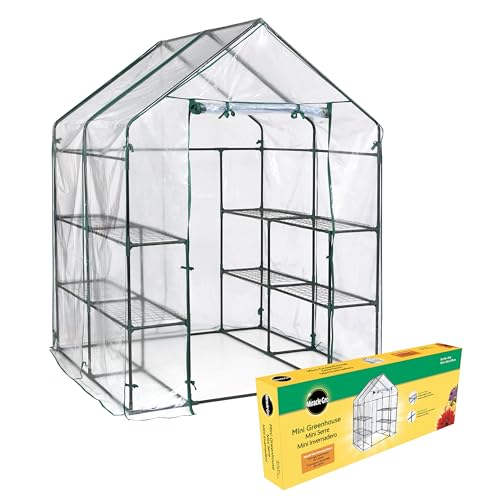
This walk-in greenhouse emphasizes accessibility and capacity. A high-grade steel frame provides structural integrity, while the clear PVC cover allows maximum sunlight. A zippered door supports easy entry and controlled ventilation, and the size is well-suited for starting seedlings and growing compact vegetables like lettuce, peppers, and herbs on a patio or balcony. The design balances airflow with protection against frost and wind, making it a versatile choice for seasonal vegetable growers.
Home-Complete 2-Tier Mini Greenhouse

This two-tier unit is ideal for small spaces and beginners. It offers enough space to house seed trays, starter pots, and small vegetable plants. The frame is powder-coated steel and topped with a durable PVC cover that filters sunlight while providing frost protection. A roll-up zippered door ensures easy access and airflow, helping to reduce humidity buildup and prevent mold on damp soil. This option suits compact patios, sunrooms, and indoor grow setups where space is a premium.
Purlyu 4-Tier Garden Greenhouse

The Purlyu 4-Tier Garden Greenhouse emphasizes a spacious design with four sturdy shelves, each capable of holding up to 24 pounds. The clear PVC cover with a roll-up door provides visibility and airflow, helping young vegetables and herbs thrive while protecting them from pests, frost, and dust. It’s advertised as tool-free assembly, making it accessible for users seeking quick setup and easy relocation, especially for seasonal vegetable crops and small-to-mid-size plantings.
Buying Guide: Key Considerations For Small Greenhouses
- Space and footprint: Measure available outdoor space to ensure the chosen greenhouse fits without crowding. Consider 2- to 4-tier configurations for best vertical use in limited areas.
- Frame material and durability: Aluminum frames resist corrosion and weathering, while steel frames offer robust support. Look for reinforced joints and durable panel materials to withstand wind and heavy rain.
- Cover material and light transmission: Clear PVC or polycarbonate panels maximize sunlight but assess UV protection and wind resistance. Double-layer or reinforced covers improve insulation for early-season starts.
- Ventilation and climate control: Roll-up doors, adjustable vents, and side windows promote airflow and temperature control, reducing humidity and disease risk for seedlings.
- Accessibility and ease of assembly: Tool-free assembly or minimal hardware reduces setup time. A roll-up door with a sturdy zipper is preferable for frequent access.
- Portability and weight: If you need to relocate seasonally, prioritize lighter frames and modular shelves. Ensure shelves can bear the weight of trays and pots.
- Protection against pests and frost: Look for mesh vents and secure door closures to deter pests. Insulated covers help retain heat in cooler months to extend the growing season.
- Maintenance and cleaning: Smooth surfaces and easy-to-clean covers help maintain hygiene. Rust-resistant frames reduce maintenance needs over time.
When selecting a small greenhouse for vegetables, weigh the balance between space savings and the level of protection you require for your climate. For apartment patios or balconies, compact multi-tier designs that maximize vertical space usually deliver the best returns. If you plan to grow a broader range of vegetables or start seedlings for transplanting outdoors, models with more headroom and stronger frames may be more suitable. Evaluate both year-round and seasonal needs to choose a solution that aligns with your growing goals and local weather patterns.