Choosing the right hand cultivator can improve soil aeration, weed control, and overall garden bed preparation. This article highlights five top-rated hand cultivators, detailing their design, materials, and ergonomic features. Each profile includes practical insights to help American gardeners select tools that fit small plots, raised beds, or perennial borders. The following picks balance durability, comfort, and performance for tasks like loosening soil, cultivating around plants, and removing weeds.
| Product | Brand | Suggested Use |
|---|---|---|
| MECHEER Hand Rake Garden Tool | MECHEER | Loosening, cultivating, weeding |
| AMES 2446300 Tempered Steel Hand Cultivator | AMES | Loosening soil, bed prep |
| Garden Guru Hand Cultivator Rake | Garden Guru Lawn & Garden Tools | Cultivating, loosening, weeding |
| Edward Tools Hoe And Cultivator | Edward Tools | Loosening, digging, weeding |
| Fiskars Xact Hand Cultivator | Fiskars | Weeding, soil aeration |
Note: All selections emphasize durable construction, ergonomic grips, and efficient tines for American garden beds, raised beds, and borders. Each review pulls from the listed features to provide a balanced, objective overview suitable for a broad range of soil types and gardening styles.
MECHEER Hand Rake Garden Tool

The MECHEER hand cultivator features a three-claw design designed for loosening, cultivating, digging, and weeding. The deep curved tines penetrate soil for effective aeration, improving root access and water penetration in compact or clay-heavy soils. Built from thick aluminum alloy, the tool emphasizes durability with a 0.28 inch claw thickness to resist bending during rigorous use. An ergonomic rubber grip with non-slip TPR material reduces hand fatigue, supporting comfortable sessions for extended garden tasks.
AMES 2446300 Tempered Steel Hand Cultivator

This 11-inch hand cultivator from AMES combines tempered steel tines with a durable wood handle. The tool is ideal for loosening packed soil and smoothing beds in planters. It excels at dislodging small weeds around perennials and annuals, and the wooden handle offers a traditional grip with a hang-up hole for easy storage. Its compact size makes it well-suited for raised beds, window boxes, and tight garden corners.
Garden Guru Hand Cultivator Rake

Garden Guru’s hand cultivator uses high carbon steel tines designed for strength and longevity. The 3 large tines provide efficient soil tilling, cultivation, and loosening, with the ability to work through heavier clay soils or compact beds. The ergonomic grip reduces palm and finger fatigue, helping maintain control during longer tasks. This tool balances power and precision, making it suitable for creating seedbeds or preparing soil in flower beds and vegetable patches.
Edward Tools Hoe And Cultivator

Edward Tools combines a carbon steel blade and head with an ergonomic rubber handle for a robust hand tiller. The heavy-duty build supports loosening soil, weeding, and digging with a focus on durability and long-term use. The tool’s design aims to deliver efficient soil penetration while keeping the user comfortable through a grippy handle and sturdy construction that’s built to resist bending under tougher soil conditions.
Fiskars Xact Hand Cultivator
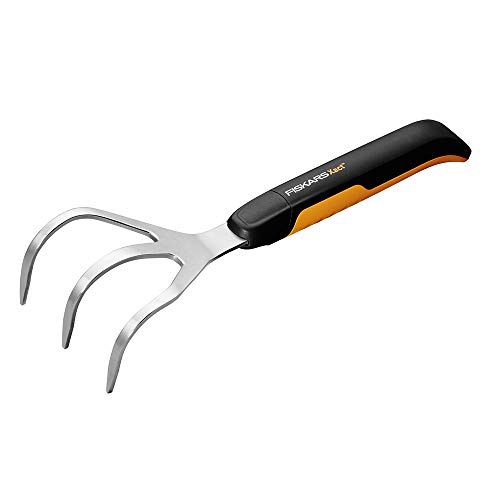
Fiskars Xact cultivator features deep, curved tines that excel at loosening and aerating soil, along with weed removal. The stainless steel head resists rust, while the soft-grip handle provides multiple grip positions for comfort. A longer handle improves balance, reducing fatigue during longer cultivation sessions. This tool is well-suited for flower beds, vegetable patches, and garden beds where precise soil work is needed without heavy machinery.
Buying Guide
Consider these key purchase factors to choose the best hand cultivator for your garden:
- Material and durability: Titanium or carbon steel tines offer strength and longevity, while aluminum alloys reduce weight for easier handling.
- Number and design of tines: Three-tine cultivators provide a balance of depth and maneuverability; curved tines aid soil penetration and aeration.
- Grip and ergonomics: Look for rubberized, non-slip handles with contours that fit your hand to minimize fatigue during extended sessions.
- Weight and balance: A lighter tool with a well-balanced head minimizes wrist strain; heavier builds may be needed for stubborn soils.
- Length and adjustability: Short-handled tools work well in tight spaces; extendable designs suit varied user heights and raised beds.
- Storage and maintenance: Wooden handles offer classic durability; stainless steel or rust-resistant coatings simplify maintenance in humid climates.
- Soil type compatibility: Heavier soils like clay benefit from stronger tines, while looser soils allow for lighter, more precise tools.
- Budget and brand reputation: Reputable brands often provide better warranties and replacement parts, which can reduce long-term costs.
These considerations help compare models across materials, ergonomics, and performance. For many American gardeners, a versatile three-tine cultivator with a comfortable grip and rust-resistant head strikes a favorable balance between durability and daily usability in home gardens, raised beds, and perennial borders.