Choosing a reliable outdoor weather station helps schools teach weather science with real-time, hyper-local data. The following five models cover a range of budgets, features, and installation ease, making them suitable for classrooms, science clubs, and school facilities. Each option offers indoor/outdoor sensing, data displays, and connectivity to help students observe trends over time.
| Product | Brand | Key Features |
|---|---|---|
| Ambient Weather WS-2902 | Ambient Weather | Wi-Fi, color LCD, multiple sensors for wind, temp, humidity, rain, UV, solar radiation |
| AcuRite Iris 5-in-1 (01512M) | AcuRite | 55+ data points, indoor/outdoor temp & humidity, wind, barometric pressure, rainfall |
| Newentor Weather Station (7.5″ Display, Black) | Newentor | Large color display, multi-sensor, 3 remote sensors, 12–24 hr forecast |
| Sainlogic SA6 | Sainlogic | 6.5″ color LCD, adjustable backlight, rain gauge, wind, moon phase |
| Ambient Weather WS-2000 | Ambient Weather | Wi-Fi remote monitoring, TFT display, all-in-one sensor array |
Ambient Weather WS-2902 WiFi Smart Weather Station
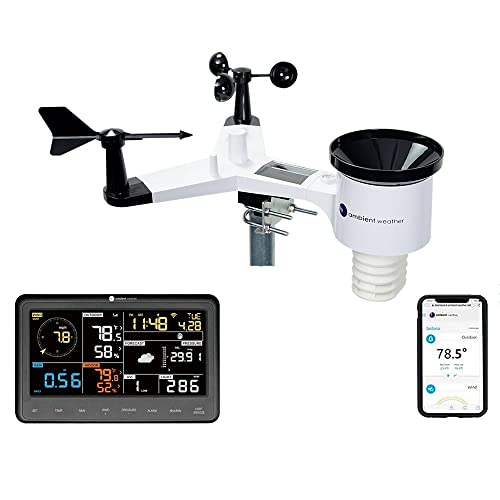
Ambient Weather’s flagship weather station offers a complete wireless sensor array, including a rain cup, and a bright LCD color display. It captures wind speed and direction, temperature, humidity, rainfall, UV intensity, and solar radiation. The unit is Wi-Fi enabled for remote data access and supports smart home integrations such as IFTT, Google Home, and Alexa. Ideal for schools that want real-time data accessible from classrooms or labs and the option to set alerts for weather conditions.
AcuRite Iris 5-in-1 Indoor/Outdoor Weather Station (01512M)
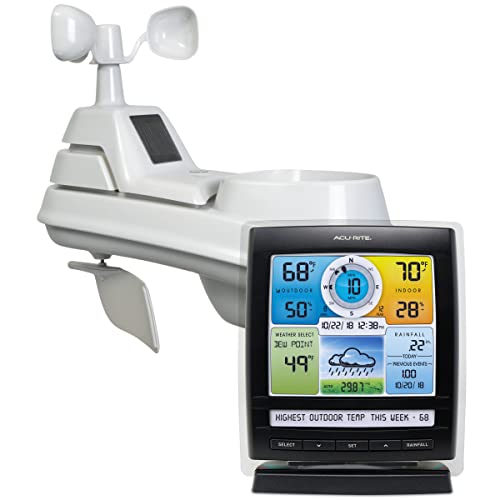
The AcuRite Iris 5-in-1 model provides more than 55 data points, including indoor/outdoor temperature and humidity, wind speed/direction, barometric pressure, and rainfall. It delivers real-time readings directly to the home display and supports long-term data collection for classroom experiments, trend analysis, and basic meteorology research.
Newentor Weather Station (7.5″ Display, Atomic Clock)

This Newentor model features a large 7.5″ LCD with a wide viewing angle and an atomic clock. It supports up to three remote sensors to monitor multiple locations (inside and outside) and provides a 12–24 hour forecast. Its display is designed for classroom visibility, with customizable alerts and a straightforward installation suitable for school settings.
Sainlogic Weather Stations SA6

The Sainlogic SA6 combines a 6.5-inch color LCD with adjustable backlighting for clear readings in classrooms or outdoor areas. It includes a rain gauge, wind data, and a moon phase display with a strong emphasis on accuracy in rainfall measurements. While no Wi-Fi is built-in, it provides reliable, hands-on meteorology data for student experiments and projects.
Ambient Weather WS-2000 Smart Weather Station
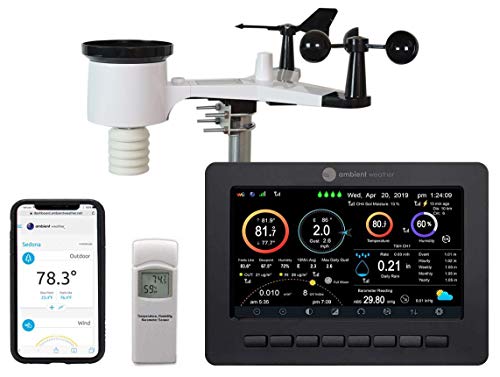
The WS-2000 expands Wi-Fi connectivity with a TFT color display and a wireless all-in-one sensor array. It measures wind speed and direction, temperature, humidity, rainfall, UV, and solar radiation, with support for both imperial and metric units. This model is well-suited for schools seeking a robust, scalable setup with remote monitoring capabilities and calibration options for classroom studies.
Buying Guide: Key Purchase Considerations
When selecting a weather station for a school setting, consider the following factors to ensure a fit-for-purpose choice:
- Data scope: Decide which variables matter for your curriculum—temperature, humidity, wind, rainfall, UV, barometric pressure, or moon phase—and choose a unit that covers those metrics.
- Display and accessibility: Large, readable displays help students in classrooms or labs; consider units with backlighting or color screens for visibility in bright or dim rooms.
- Connectivity: Wi-Fi-enabled models offer remote data access and integration with lesson plans, while offline models emphasize hands-on data collection in the field.
- Sensor range and placement: Outdoor sensors should be weatherproof and placed away from heat sources or obstructions. Check the recommended mounting height and fence/pole compatibility.
- Data logging and export: Some models support data logging, trend analysis, and exporting to spreadsheets, which is beneficial for student projects and science fair entries.
- Ease of use: Look for straightforward installation, clear manuals, and reliable customer support to minimize delays in class activities.
- Expandability: If the curriculum grows, consider systems that support additional sensors or multiple display units for different classrooms.
- Cost vs. value: Balance the number of features against budget, prioritizing core classroom needs such as reliable readings and an intuitive interface.
- Maintenance: Consider battery life for wireless sensors and whether solar, rain, or wind sensors require regular upkeep.
In classrooms, a balance of accuracy, ease of use, and data accessibility drives the best learning outcomes. The five models above provide a spectrum of options—from all-in-one Wi-Fi stations for remote monitoring to budget-friendly, hands-on systems that teach basic meteorology concepts through tangible measurements.