Growing healthy seedlings indoors starts with the right light. The following LED grow lights are designed to support seed germination, early vegetative growth, and strong seedling vigor while keeping energy use efficient. This guide highlights five well-regarded options, explains how they help young plants thrive, and offers practical tips for choosing the best fit for your space.
| Product | Brand | Key Benefit | Approx Coverage (seedling area) |
|---|---|---|---|
| VIPARSPECTRA P700 Grow Light | VIPARSPECTRA | High 11000 lumens, optimized spectrum for seedlings | 2×2 ft |
| FREELICHT 4ft LED Grow Light | FREELICHT | Sunlike spectrum, energy efficient, easy to install with multiple units | 4 units for larger tents |
| Barrina 4ft T8 LED Grow Light Strips (6-Pack) | Barrina | Full spectrum, high PPFD for as-needed replacement | Typically modular across shelves/tend |
| FECiDA 65W LED Grow Light | FECiDA | Stepless dimming, strong output, daisy-chain capable | 2×2 ft area potential |
| GooingTop 6000K Clip Grow Light | GooingTop | Clip-on design, multi-height clamp with timer | Compact or smaller benches |
Note: The listed products are selected for seedling-focused performance, energy efficiency, and user-friendly features. Each item comes with a feature set that aligns well with starting seeds, supporting robust early growth, and delivering practical operation in typical home setups.
VIPARSPECTRA P700 Grow Light Overview

The VIPARSPECTRA P700 combines a 70-watt LED array with a full-spectrum driver designed for seedling and vegetative stages. It delivers approximately 11000 lumens across a balanced spectrum that mirrors natural sunlight, including red (660nm) and white (3000K and 5000K) components. The unit uses a fanless design with large aluminum heat sinks to reduce heat buildup and extend lifespan, making it a quiet, low-maintenance option for small to mid-size grow tents. Its efficiency is geared toward delivering strong PAR in a 2×2 ft vegetative area, allowing growers to use less electrical power than traditional HID setups while maintaining robust growth in seedlings.
Key considerations for seedlings: intense, even light distribution helps uniform germination; the heat-dissipation design reduces heat stress in compact spaces; the fixed spectrum is optimized for early growth, though some users pair with reflectors or additional fixtures if expanding to larger areas.
FREELICHT 4ft LED Grow Light

The FREELICHT 4ft LED grow light provides a sunlike spectrum for all growth stages, with an emphasis on red spectrum to boost photosynthesis during vegetative and flowering phases. While rated at 60W, it is marketed as the equivalent of a 350W HPS system, translating to noticeable energy savings. The design supports modular use: up to four units can be linked for broader coverage, and installation can be performed as hanging or surface mounting. This makes it a versatile choice for larger benches or multi-tent setups where seedling trays require uniform lighting and even coverage without significant electricity spikes.
For seedlings, consider placement height and brightness. The light’s spectrum helps with early development, and the energy efficiency can be a practical benefit for growers running multiple seedling trays or spaces with limited power outlets.
Barrina 4FT T8 LED Grow Light Strips (6-Pack)

Barrina’s 4-foot T8 grow light strips deliver full-spectrum white light in a compact form factor. The 252W system uses 1152 LEDs to provide a high light output while keeping energy use reasonable. The product emphasizes 5000K white light for broad-spectrum coverage, making it suitable for seedling stages, vegetative growth, and blooming when paired with other spectrum support. The brand notes compatibility with Barrina GM cords to facilitate easy chaining, which can simplify installation in longer grow benches or rack setups. It is a cost-conscious option for evenly lighting multiple seed trays across shelves or tents.
Seedling applications benefit from a broad, efficient light that minimizes hotspots. Barrina’s strips can be arranged to cover uneven bench layouts, and their modular nature supports scaling portions of a grow space without overhauling the entire lighting plan.
FECiDA 65W Full Spectrum Grow Light

The FECiDA 65W grow light provides a compact 12.4×8.4-inch panel with a 6000-lumen output, designed for a 2×2 ft area as a seedling or vegetative light. It features stepless dimming from 0 to 100%, enabling precise adjustment to suit seed-starting needs and reduce electricity waste. A daisy-chain function allows multiple units to be connected for extended coverage, which is helpful for growing more trays in the same space. The built-in heat management and straightforward hanging setup make it a practical option for beginners and experienced growers alike who want to fine-tune light intensity as seedlings progress toward transplanting.
In seedling care, consistent intensity helps reduce stretching and promotes sturdy seedling architecture. The dimming capability allows you to ramp up light as roots become established and the canopy expands, helping plants transition smoothly to larger containers or outdoor conditions.
GooingTop 6000K Clip Grow Light
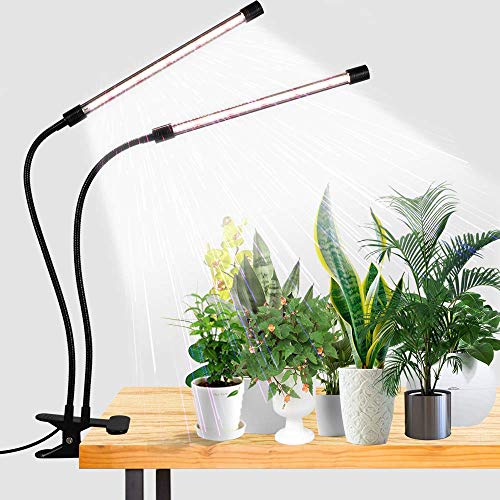
The GooingTop clip-on grow light delivers a 6000K white light that mimics natural daylight and uses a combination of 10 red and 74 white LEDs to provide a balanced spectrum. The fixture includes a flexible gooseneck and a robust clamp, enabling placement at the precise angle needed for seed trays, small shelves, or desk-top setups. A timer function is available with 4-, 8-, or 12-hour cycles, helping automate seedling care during busy days. Ideal for compact spaces, this light supports seed germination and early growth with a simple, space-saving design and adjustable height.
For seedlings, the key benefits are stable, flicker-free light and an easy-to-use timer that reduces the risk of under- or over-lighting during crucial germination windows. The clip design makes it a flexible option for desks, windowsills, or small grow tents where space is at a premium.
Buying Guide: Key Considerations For Seedlings
- Light spectrum: Seedlings typically respond well to a spectrum that closely resembles natural daylight with a balance of blue and red wavelengths. Look for full-spectrum LEDs labeled for seed starting or vegetative growth rather than only warm-white light.
- Intensity and coverage: Seedlings require enough photon flux to support healthy root and leaf development without causing heat stress. For small trays, fixtures in the 3000–7000 lux range at the canopy level are common; larger tents may benefit from higher PAR outputs or multiple fixtures.
- Adjustability: Dimmable lights, adjustable hanging heights, and timer features help tailor intensity to growth stage and prevent light burn. Daisy-chain options can simplify expanding coverage as seedlings mature.
- Heat and energy efficiency: LED fixtures are typically cooler and more energy-efficient than HID options. Heat sinks or fanless designs help maintain stable environments, especially in compact tents or rooms with limited airflow.
- Durability and setup: Look for fixtures with sturdy mounting options (hanging kits, clamps, or adjustable stands) and straightforward installation. Aluminum heat sinks and quality LEDs contribute to longer lifespans and reliable operation.
- Compatibility and expansion: If you plan to grow multiple seed trays or scale up, modular systems (linkable units, strip lights, or adjustable fixtures) enable easier expansion without large upfront remodeling.
- Safety and space: Ensure power cords and outlets meet your space constraints and that fixtures come with protective housing suitable for indoor use and moisture considerations around seedlings.
Overall, the best option depends on your space, budget, and how many trays you need to light. For compact setups, a single high-output unit with adjustable height and spectrum can be sufficient. For larger seedling operations, a modular or multi-fixture approach provides flexibility, uniform coverage, and the ability to scale as plants move toward transplanting.