The right weather station can transform farming decisions by providing localized data on temperature, humidity, rainfall, wind, and more. This guide highlights five top options that balance accuracy, connectivity, and ease of use for agricultural settings in the American market. Each model below is evaluated for farm-scale relevance, data access, and practical features like alerts and remote monitoring.
Summary of Selected Products
| Product | Brand | Main Strengths | Connectivity | Site |
|---|---|---|---|---|
| Ambient Weather WS-2902 WiFi Smart Weather Station | Ambient Weather | Hyper-local data, smart home integration | WiFi | Backyard/field monitoring |
| Ambient Weather WS-2000 Smart Weather Station | Ambient Weather | All-in-one sensor array, wide data range | WiFi | Remote monitoring, alerts |
| Tempest Weather Station | WeatherFlow | Ultra-local forecasts, robust sensors | WiFi | Precision farming, large properties |
| Sainlogic SA6 Plus | sainlogic | AI weather forecasts, easy reading display | WiFi | Farmstead and garden use |
| Newentor Weather Station | Newentor | Multi-sensor setup, long-range forecast | WiFi (optional | Multiple locations on farm |
Ambient Weather WS-2902 WiFi Smart Weather Station
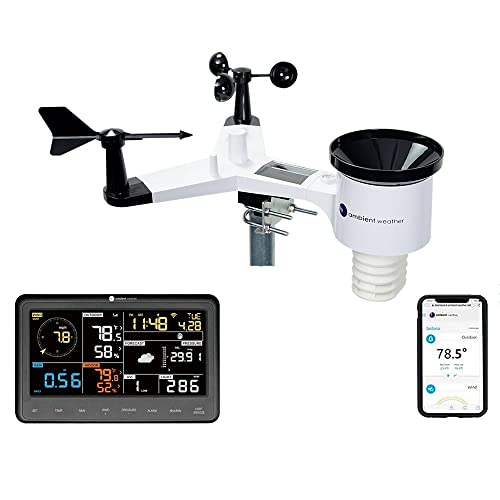
The Ambient Weather WS-2902 combines a comprehensive Osprey Sensor Array with an easy-to-read LCD color display. It measures wind speed and direction, temperature, humidity, rainfall, UV intensity, and solar radiation. Wi‑Fi connectivity enables remote access and alerts, while IFTT and smart home compatibility (Google Home, Alexa) support automated agricultural decisions, such as irrigation timing based on rainfall or soil moisture triggers.
Ambient Weather WS-2000 Smart Weather Station
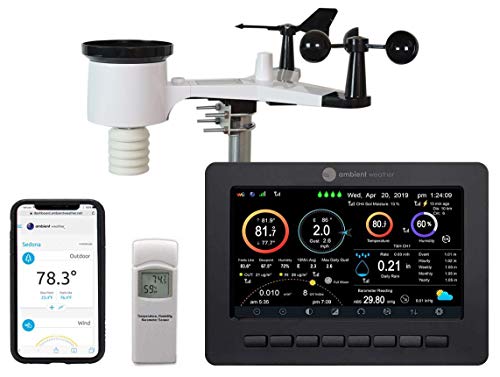
The WS-2000 provides a full all-in-one sensor array with wind speed/direction, temperature, humidity, rainfall, UV, and solar radiation. It supports both imperial and metric units and offers calibration features for precise farm data. Its Wi‑Fi connection allows remote monitoring, enabling farmers to set alerts for frost, heat, or rainfall events and to collect long-term datasets for crop planning and irrigation scheduling.
Tempest Weather Station
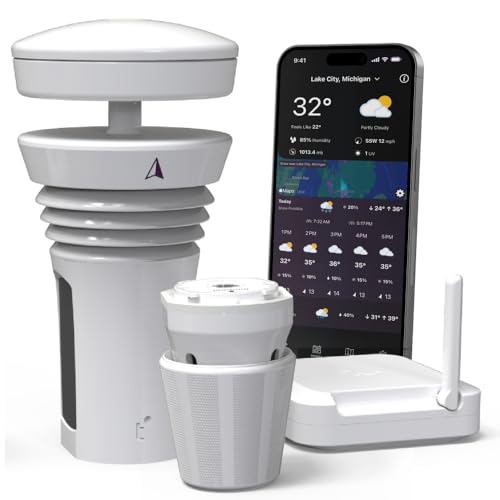
The Tempest Weather Station offers a robust suite of measurements: temperature, humidity, barometric pressure, wind speed/direction, dew point, solar radiation, UV index, and rainfall. A built-in solar-powered outdoor sensor transmits data wirelessly to the base every few seconds, supporting real-time monitoring across larger agricultural plots and enabling precise irrigation and harvest timing decisions based on current conditions and forecasts.
Sainlogic SA6 Plus Smart Weather Station

The SA6 Plus emphasizes AI-driven forecasts via the Weatherseed app, with 24/7 monitoring and alerts. It features a clear, high-contrast display designed for easy readability and is suitable for both home and farm settings. The system supports long-term data storage and provides a convenient way to stay ahead of weather-related risks that can impact plant growth, pests, and irrigation needs. It broadcasts data to smartphones for prompt decision-making.
Newentor Weather Station

Newentor combines a 7.5-inch LCD color screen with multi-sensor capability to monitor inside/outside temperature and humidity, humidity highs/lows, time/date, and a next-hour to 12–24 hour forecast. It supports up to three remote sensors, enabling multiple zones across a farm or garden. Its adjustable backlight improves readability under bright sun or dim evenings, making it practical for field and greenhouse use alike.
Buying Guide
Key purchase considerations for agricultural use:
- Data breadth: Look for sensors that cover temperature, humidity, rainfall, wind speed/direction, UV, and solar radiation. More data supports better irrigation, pest management, and planting decisions.
- Connectivity and data access: WiFi enables remote monitoring, cloud storage, and alerts. Ensure compatibility with your farm’s network and preferred data platforms (IFTTT, WeatherSeed, etc.).
- Sensor placement and range: For larger plots, consider the outdoor sensor’s range, wind exposure, and the ability to place multiple sensors for representative coverage.
- Display readability: An easy-to-read display is essential, especially for in-field checking. Look for high-contrast screens and adjustable backlighting.
- Data storage and export: Long-term trend analysis is valuable. Choose systems offering downloadable data (CSV/Excel) and multi-year storage if needed.
- Forecast accuracy: AI-driven forecasts and hyper-local data improve planning for irrigation, harvesting, and pest management, especially in variable climates.
- Ease of setup: Some systems emphasize simple installation with quick mounting; others offer more advanced calibration and customization. Align with your technical comfort level.
- Power and maintenance: Solar-powered options reduce maintenance. Check sensor lifespan, rain gauge accuracy, and potential needs for calibration or replacement parts.
Use-Cases In Agriculture
For crop irrigation, timely rainfall data and soil moisture correlations help optimize water use. In greenhouse operations, precise temperature and humidity monitoring maintains ideal growing conditions and reduces disease risk. In open fields, wind data supports spraying decisions to minimize drift and protect worker safety. Across all scenarios, the ability to receive alerts and review historical trends supports proactive farming choices rather than reactive responses.
All models above provide a balance of localized data and remote accessibility, enabling farmers to tailor weather monitoring to the size and layout of their operation. When selecting, align the device features with your field size, crop types, irrigation practices, and preferred data workflows to maximize agricultural outcomes.