Keeping a lush, weed-free lawn is a common goal for American homeowners. The right product can target broadleaf weeds and crabgrass without harming your grass when used as directed. This article profiles five trusted weed killers that are commonly recommended for lawns, discusses how they work, and outlines key buying considerations to help you choose the best option for your yard.
Summary of selected products:
- Ortho WeedClear Weed Killer for Lawns with Comfort Wand — Kills 250+ listed weeds down to the root.
- Southern Ag Amine 2,4-D Weed Killer — Versatile broadleaf weed control for turf and pastures.
- Ortho WeedClear Lawn Weed Killer Ready-To-Spray — Fast-acting, effective on dandelion, clover, crabgrass, and more.
- Natural Elements Weed Killer — All-natural formulation derived from vinegar, safe for pets and families when applied properly.
- Spectracide Weed Stop For Lawns Plus Crabgrass Killer — Broadweed control, root-kill performance, lawn-friendly when used as directed.
Ortho WeedClear Weed Killer for Lawns with Comfort Wand

Ortho’s WeedClear is designed to attack more than 250 listed weeds, including stubborn dandelions and clover, while leaving common lawn grasses unharmed when used as directed. The Comfort Wand enhances application accuracy, and the product claims rapid results with a single treatment. It also supports spot treatments for weeds beyond the lawn’s edge when properly applied, including St. Augustinegrass and other common turfgrasses. This makes it a strong option for homeowners seeking a broad-spectrum solution with minimal effort.
Southern Ag Amine 2,4-D Weed Killer
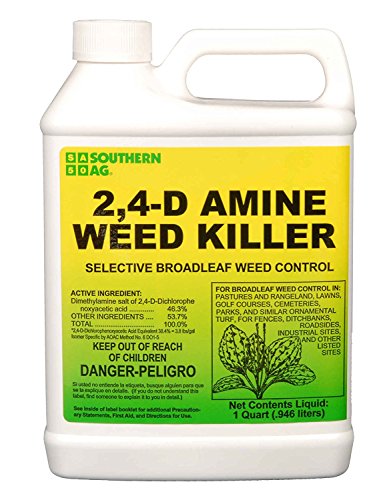
This 32-ounce formulation provides a low, economical use rate and targets many broadleaf weeds and some woody plants. It is suitable for application in turf areas, pastures, rangeland, ditch banks, and fences, offering flexibility for larger landscapes. While effective on a broad spectrum of weeds, users should follow label directions to protect desirable grasses and avoid runoff into waterways. This product is a practical choice for those managing both lawn care and neighboring vegetative areas.
Ortho WeedClear Lawn Weed Killer Ready-To-Spray

This ready-to-spray formula targets weeds in lawns, including dandelion, clover, crabgrass, and chickweed, with a fast-acting approach. The product claims to kill listed weeds down to the root in one application and to be safe for use on common lawn grasses when used as directed. It’s particularly convenient for homeowners who prefer a simple, spray-on solution without mixing. Broadly compatible with bermudagrass, fescues, Kentucky bluegrass, ryegrass, and zoysia, it’s a versatile option for mixed-turf yards.
Natural Elements Weed Killer

Natural Elements offers an all-natural weed killer derived from plant-based components like vinegar. It is designed for use around lawns, gardens, flowerbeds, and landscape beds, with the caveat that it can kill grass if applied directly to turf. This makes it ideal for targeted spot applications around hardscapes, flower beds, and edging where you want to suppress vegetation without introducing synthetic herbicides into surrounding areas. It’s a strong choice for households prioritizing pet and family safety when used carefully.
Natural Armor Weed and Grass Killer (128 oz)

Natural Armor’s concentrated formula contains no glyphosate and is marketed as easy-to-use for any location where vegetation is unwelcome. It’s described as ready-to-use with minimal preparation and is positioned as pet- and people-friendly after drying. The product emphasizes broad applicability—from around flower beds and trees to driveways, patios, and walkways—making it a flexible option for properties with varied landscaping features. Users should apply carefully to avoid unintended damage to desired plants.
Spectracide Weed Stop For Lawns Plus Crabgrass Killer

Spectracide Weed Stop For Lawns Plus Crabgrass Killer is designed to kill broadleaf weeds and crabgrass without harming most lawn grasses when used as directed. It lists more than 200 weed types and provides visible results in as little as five hours on treated weeds. This product is suitable for homeowners seeking rapid suppression of a wide variety of common lawn weeds while maintaining lawn health. Always follow label directions to protect desirable turf and avoid non-target damage.
Buying Guide: Key Purchase Considerations
- Weed spectrum: Check the label to confirm which weed types are controlled (broadleaf, grasses, annuals, perennials). If you have frequent crabgrass, ensure the product covers it specifically.
- Lawn compatibility: Some products are safe for most grasses but not all, and a few are not intended for use on lawns at all. Verify your grass type and follow directions to avoid injury.
- Application method: Ready-to-spray formulas save time, while concentrates require mixing. Consider the number of treatments you typically need per season and the ease of use.
- Safety and pet/family considerations: All-natural or non-glyphosate options may reduce certain risks but still require proper application, drying times, and prevention of runoff.
- Spot treatment vs. broadcast: If weeds are localized, spot treatments can minimize lawn exposure. For widespread weeds, a broadcast approach may be more efficient.
- Environmental impact: Look for products labeled as safe for use around water features and avoid products with volatile ingredients near children and pets.
- Weather and timing: Most products require dry conditions after application. Some products act quickly, while others become effective over days; plan around rain forecasts and mowing schedules.
- Perennial vs. annual weeds: Perennials may require multiple applications for complete control. Consider long-term weed management strategies including lawn health and mowing height.
- Regulatory compliance: Always follow local regulations and product labels. Some regions have restrictions on certain herbicides or application windows.
This selection emphasizes a mix of traditional synthetic options and safer, more natural formulations. When choosing, weigh weed types in your yard, grass species, pet and family safety, and your willingness to follow label directions for optimal results. Always test any product on a small lawn patch first to observe any adverse reactions before broader application.