Efficient drip irrigation begins with reliable drip lines. This guide reviews five top-performing drip lines suitable for American gardens, emphasizing flexibility, weather resilience, and easy installation. Whether you’re watering a flower bed, vegetable plot, or container garden, these options help minimize water waste while delivering steady moisture to plant roots.
| Product | Brand | Length | Key Benefit |
|---|---|---|---|
| Bonviee 50 FT Blank Distribution Tubing | Bonviee | 50 ft | Flexible, weather-resistant, main line for small systems |
| (100′ Roll) 1/4-Inch Dripline | One Stop Outdoor | 100 ft | 6-inch emitters, easy hookup to 1/2″ systems |
| TBPA 1/4in Drip Tubing | TBPA | 50 ft | Dual-layer protection, UV resistant |
| Raindrip 052020P Drip Tubing | Raindrip | Varies | Versatile, suitable for trees, shrubs, beds |
| MIXC 100ft 1/4 inch Tubing | MIXC | 100 ft | High flexibility, easy installation |
Note: All products are designed for outdoor use and compatible with common 1/4″ or 1/2″ drip irrigation components. This selection balances flexibility, durability, and ease of installation for diverse garden layouts.
Bonviee 50 Ft Blank Distribution Tubing

The Bonviee tubing is marketed for flexible installation in various garden settings, including flower beds and ground cover. Its primary strength lies in its ability to navigate tight turns with fewer elbows, which reduces installation time and potential leak points. The tubing is described as weather-tolerant, suitable for year-round use whether buried or surface-mounted, allowing for year-round irrigation planning. As a main line in small drip systems or as a feeder from larger 1/2″ lines, it supports branching to micro-watering setups, making it a versatile backbone for compact irrigation configurations.
(100′ Roll) 1/4-Inch Dripline
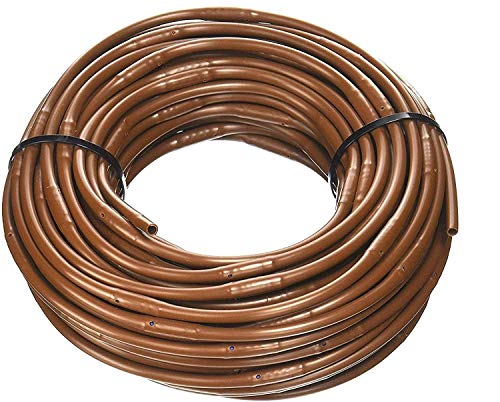
This brown 100-foot dripline from One Stop Outdoor is designed to work with 1/4″ fittings and features six-inch emitter spacing with a nominal flow of 0.5 GPH from each emitter. It’s positioned as a straightforward installation option that resists chemicals and fertilizers common in landscaping. The tubing is flexible enough to adapt to curved beds, and it’s intended to attach to larger 1/2″ drip tubing via 1/4″ barbed fittings. Its durability and ease of use make it suitable for mid-sized garden projects and groundcover layouts where uniform moisture distribution is desired.
TBPA 1/4in Drip Irrigation Tubing

The TBPA 1/4-inch tubing is described as a main supply line suitable for low-flow drip systems, acting as a feeder to deliver water through various components. It emphasizes dual-layer explosion-proof protection to minimize leaks under pressure shifts. Made from layered polyethylene, it offers UV resistance and flexibility for underground or above-ground use. The tubing’s construction meaningfully supports curves and corners, helping maintain even water delivery across irregular planting areas.
Raindrip 052020P Drip Tubing
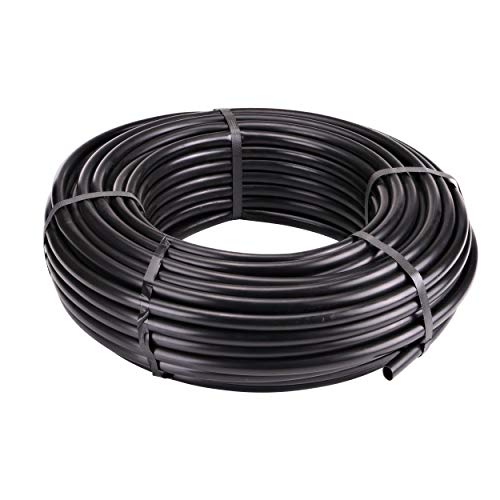
Raindrip’s 1/2-inch irrigation tubing is presented as a main or feeder line for drip systems, with compatibility to attach to water sources and main lines. The tubing is designed for use with various drip components: emitters, drippers, and connecters, enabling applications across trees, shrubs, beds, pots, and planters. Its flexible profile helps accommodate curved layouts while maintaining consistent moisture distribution—an essential feature for long, uninterrupted runs in larger garden zones.
MIXC 100ft 1/4 Inch Tubing

MIXC’s drip hose offers year-round use and is described as highly flexible, ideal for tight turns and complex layouts in gardens, beds, and landscaped areas. It’s designed to function as a main line or a distributor feeding a micro-watering system connected to larger 1/2″ drip tubing. The tubing’s flexibility and resilience make it suitable for plots that require multiple watering zones without frequent elbow fittings, reducing leak risk and installation complexity.
PRUNkuar 50ft 1/4 Inch Drip Tubing

PRUNkuar’s 1/4-inch tubing is pitched as an irrigation line suitable for linking a main supply to distribution ends. It highlights easy connection to drip irrigation parts and micro fittings, with a focus on straightforward setup from a water source through to emitters. The packaging notes the coil comes shrink-wrapped for convenience, suggesting ready-to-use packing that can expedite initial installation and reduce setup waste.
Buying Guide: Key Purchase Considerations
When choosing drip lines, consider length, diameter, and compatibility with your existing irrigation components. A flexible main line minimizes installation labor and reduces leak points at corners. For small, contained beds, shorter runs with frequent emitters may provide better uniformity, while larger plots benefit from longer main lines paired with distributed lines. Durability against sun exposure, fertilizer exposure, and weather is essential for outdoor longevity. UV-resistant and reinforced materials reduce damage from repeated heating and cold cycles.
Emitter spacing and flow rate should match plant needs and local climate. Tighter spacing with evenly distributed emitters supports quicker, uniform soil moisture, particularly for dense plantings. Check compatibility with your fittings: 1/4″ lines commonly connect to barbed fittings, while 1/2″ lines often serve as main lines—confirm the transition components before purchase.
Installation versatility is another factor. Some tubing is designed for underground burial, others for surface routing. If your garden includes sloped terrain or obstacles, a highly flexible tubing option can simplify routing and minimize tension at connectors. Consider whether you need a complete kit that includes quick-connect fittings, adapters, and emitters, or if you already own a compatible system and only need distribution tubing.
Environmentally, look for tubing made from recyclable or virgin materials to ensure consistent water quality. For seasonal climates, weather tolerance and the ability to withstand frost and heat cycles reduce long-term replacement needs. Finally, verify product warranties and availability of replacement parts, such as emitters or connectors, to keep your irrigation system scalable and easy to repair.