Choosing the right potting mix is essential for growing healthy vegetables in containers. This guide highlights top options that support strong roots, balanced moisture, and steady nutrition. Each product below is tailored for container gardens and vegetable growth, with features like extended feeding, moisture retention, and organic blends to suit different growing conditions. Use the Buying Guide to compare options and pick the best fit for your setup.
| Product | Brand | Size | Notes |
|---|---|---|---|
| Miracle-Gro Potting Mix, 8 qt (2-Pack) | Miracle-Gro | 8 qt x 2 | Feeds up to 6 months; great for containers |
| Burpee Premium Organic Potting Mix | Burpee | 9 Quarts | OMRI Listed; moisture retaining |
| Back to the Roots 12 Quart Potting Mix | Back to the Roots | 12 qt | Peat-free; US-made; moisture control |
| Miracle-Gro Potting Mix, 16 qt (2-Pack) | Miracle-Gro | 16 qt x 2 | Feeding up to 6 months; fills larger containers |
| Wakefield Biochar Premium Potting Mix | Wakefield Biochar | 2 Quarts | Biochar blend; improved aeration and nutrients |
Miracle-Gro Potting Mix, 8 Qt (2-Pack)

Miracle-Gro Potting Mix feeds container plants for up to six months, increasing blooms and color versus unfed plants. This bundle includes two 8-quart bags, each capable of filling two 8-inch containers. The mix is designed to help plants grow bigger and stronger by providing sustained nutrients. It’s suitable for vegetables grown in pots, planters, or small raised beds, and integrates with other Miracle-Gro soil products for extended feeding.
Burpee Premium Organic Potting Mix, 9 Quarts

Burpee Organic Premium Potting Mix combines plant food with coconut coir to promote robust root growth and healthy vegetables, herbs, and flowers. OMRI Listed for organic use, it’s ideal for container plantings and raised beds. The blend provides instant nutrients and a slow-release feed for up to three months, and the coconut coir helps retain moisture while remaining sustainable for both indoor and outdoor use.
Back to the Roots 100% Organic Potting Mix (12 Qt)
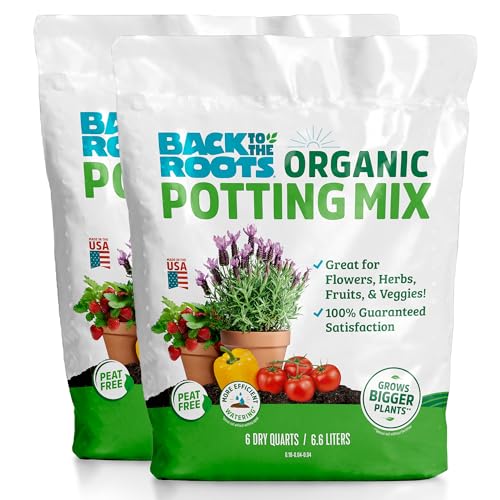
Back to the Roots offers a 100% organic, peat-free mix made from upcycled plant matter and wood fines produced in the USA. It’s all-purpose, suitable for herbs, vegetables, fruits, and flowers, with enhanced moisture control and pH balance thanks to yucca extract and dolomitic limestone. This option emphasizes sustainability and a lighter carbon footprint while supporting container and raised-bed gardening.
Miracle-Gro Potting Mix, 16 Qt (2-Pack)
This Miracle-Gro bundle provides two 16-quart bags designed to fill larger planters (one 12-inch container per bag, depending on root ball). It offers up to six months of feeding to promote bigger, more colorful plants. The product is suitable for a variety of container-grown vegetables and other ornamentals, with easy application and compatibility with other Miracle-Gro soil products for extended nutrient delivery.
Wakefield Premium Biochar Blend Potting Mix

Wakefield’s premium biochar potting mix blends organic components with humic acid and CarbonBoost to support robust root systems and nutrient uptake. This formula aims to improve water retention and drainage balance, making it suitable for container gardens and raised beds alike. It’s designed to foster healthy microbial activity and long-term soil fertility, particularly for vegetables and herbs grown in pots or planters.
Buying Guide — Key purchase considerations
- Nutrient delivery: Look for mixes with extended feeding or added organic fertilizers if you want longer intervals between re-fertilizing, especially for heavy-feeding vegetables like tomatoes and peppers.
- Moisture management: Choose blends with moisture-retention properties (such as coconut coir or biochar) to reduce watering frequency and prevent root rot in hot climates or indoors with limited drainage.
- Peat vs peat-free: Peat-free options are increasingly preferred for sustainability and often have better aeration. Peat-based mixes can be effective but come with environmental trade-offs.
- pH balance: For vegetables, a balanced pH (roughly 6.0–7.0) supports nutrient availability. Some mixes include lime or dolomitic limestone to help maintain pH stability.
- Organic certifications: If you prefer organic gardening, check for OMRI listings or other certifications ensuring suitability for organic methods.
- Container size compatibility: Match the mix to your pot size; larger containers require more bulk and may benefit from higher nutrient content to support bigger plants.
- Reuse and sustainability: Peat-free and locally sourced blends reduce environmental impact and may be preferable for long-term container gardens.
- Compatibility with amendments: Consider whether you plan to add extra compost, worm castings, or biochar. Some mixes are designed to work well with amendments for customized nutrition.
Choosing between these options depends on your gardening style, container size, and whether you prioritize organic ingredients or extended feeding. For beginners, a readily available brand with clear feeding duration and moisture control is often the easiest path to steady vegetable yields. For experienced container gardeners, blends that optimize root health and microbial activity may yield noticeable improvements in vigor and harvest time.