Choosing an insecticide dust requires balancing pest control with safety around pollinators. This guide highlights five ready-to-use dusts that target a range of crawling and flying pests, including those that commonly threaten bee-friendly environments. Each product is evaluated for broad-spectrum effectiveness, residual protection, indoor/outdoor use, and practical application in hard-to-reach spots. Always follow label directions and consider non-chemical pest strategies when bees may be present nearby.
| Product | Brand | Key Benefits | Approximate Coverage Note |
|---|---|---|---|
| Atticus Tirade 1% Dust Insecticide | Atticus | Ready-to-use, 1% cyfluthrin; controls flying and crawling insects; lasting residual | Good for hard-to-reach spots |
| Delta Dust Multi Use Pest Control Insecticide Dust | Bayer | Versatile indoor/outdoor use; broad pest target list, large coverage | About 2,000 sq. ft. per pound (label-specific) |
| Tempo 1% Dust Insecticide | USA Supply | Fast knockdown and long residual; indoor/outdoor versatility; includes safety gear | Long protection up to a year (typical use areas) |
| 1 LB Delta Dust Insecticide and JT Eaton Hand Duster | Generic | Easy application with duster; broad target pests; indoor/outdoor use | Cracks, crevices, wall voids |
| Control Solutions D-Fense Dust | Control Solutions | Low-odor, long residual; effective against multiple crawling pests | Undisturbed residual up to 8 months |
Atticus Tirade 1% Dust Insecticide

Atticus Tirade 1% Dust Insecticide provides broad-spectrum control with cyfluthrin as the active ingredient. The product is ready to use, eliminating the need for measuring or mixing. It targets flying and crawling pests, including ants, wasps, cockroaches, and more, with a lasting residual that helps keep treated areas pest-free after application. Suitable for use in indoor and outdoor settings, it can reach insects in cracks, crevices, and other hard-to-reach spaces. Always apply according to the product label to minimize risk to non-target species, including pollinators when bees may be nearby.
Features include:
– Powerful broad-spectrum control with cyfluthrin
– Ready-to-use format for simple application
– Effective against 50+ household pests with lasting residual
Delta Dust Multi Use Pest Control Insecticide Dust
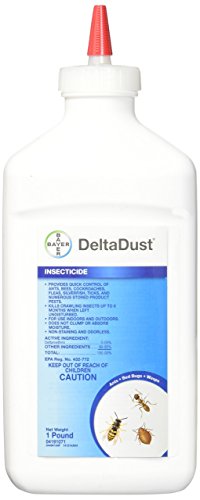
Delta Dust is a versatile bed bug and general dust insecticide designed for broad indoor/outdoor use. It covers a wide range of pests, including ants, bed bugs, cockroaches, termites, silverfish, spiders, wasps, and even bees as listed on some label scopes. The dust is designed to be applied in wall voids, cracks, and crevices where pests hide. When used in areas accessible to pollinators, take care to limit exposure to bees and flowering plants and follow label directions for safe application windows.
Features include:
– Large coverage and broad target pest list
– Suitable for cracks and crevices, wall voids, and other hard-to-reach areas
– Effective for both indoor and outdoor treatments
Tempo 1% Dust Insecticide
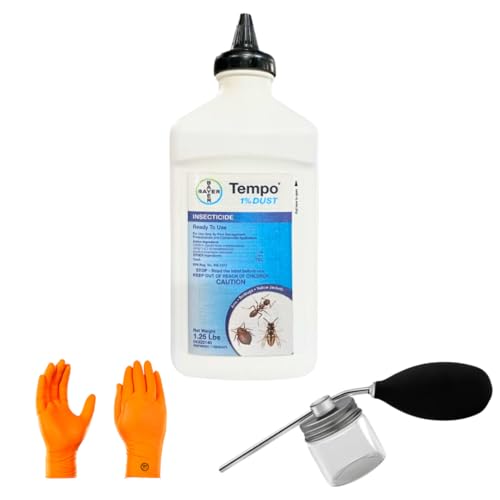
Tempo 1% Dust Insecticide is a fast-acting product designed for wasps, hornets, ants, and roaches. It delivers rapid knockdown with a long residual effect, helping to suppress reinfestations for up to a year in treated areas. It’s suitable for use both indoors and outdoors, including wall voids, attics, crawlspaces, and eaves. When bees or other pollinators are present in the vicinity, avoid direct application on flowering plants or areas frequented by foraging bees and follow safety label guidance.
Features include:
– Fast-acting knockdown with long residual protection
– Indoor and outdoor use in wall voids and hidden spaces
– Specifically noted for stinging insects in labeled environments
1 LB Delta Dust Insecticide and JT Eaton Hand Duster

This Delta Dust combination includes a 1/2-pound bag for dusting and a hand duster for controlled application. The product supports use in indoor and outdoor settings, focusing on cracks, crevices, wall voids, and other hard-to-reach areas. Its broad target list includes bed bugs, ants, and a range of crawling insects, making it a practical option for embedded pest problems. Exercise caution in areas accessible to bees and pollinators, adhering to label instructions to reduce unintended exposure.
Features include:
– Simple top-off application and dusting method
– Indoor/outdoor use in voids and crevices
– Broad pest range including bees among many others on label directions
Control Solutions D-Fense Dust
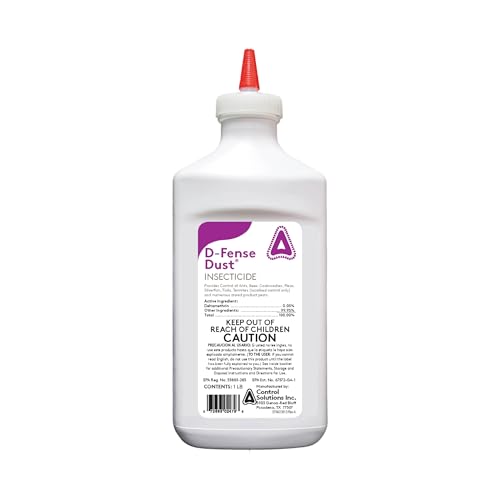
D-Fense Dust uses 0.05% deltamethrin in a desiccant-based dust formulation for residual, non-staining control. It is designed for cracks, crevices, and voids to treat a range of crawling pests, with residual control lasting up to eight months if undisturbed. This product is suitable for long-term treatments in structural areas where pests hide. Care should be taken to avoid direct contact with flowering plants and pollinators, following the label guidelines for safe use around bees.
Features include:
– Non-staining, odorless formulation
– Residual control up to eight months in undisturbed areas
– Broad spectrum against ants, cockroaches, silverfish, and other crawling pests
Buying Guide: Key Considerations For Purchasing Insecticide Dusts Around Bees
- Bees and pollinators: Choose products with clear label guidance on proximity to flowering plants, apiaries, and other pollinator-friendly zones. When possible, apply dusts during times of low bee activity and in areas that minimize exposure to flowering vegetation.
- Active ingredients and spectrum: If targeting multiple pests, look for products with proven broad-spectrum activity. Consider rotating active ingredients to reduce resistance risk in long-term treatments.
- Residual protection: A longer residual can reduce the need for frequent applications, but ensure the treated area remains accessible to humans and non-target wildlife without unintended exposure to pollinators.
- Application method: Dust formulations are ideal for wall voids, cracks, and crevices. Ensure you have the right applicator tools (dusters or puffers) and follow nozzle instructions to deliver a precise coating rather than excessive dispersal.
- Indoor vs. outdoor use: Plan applications around where pests hide, including attics, crawl spaces, and behind appliances. For outdoor use, avoid windy conditions and flowering plant beds to minimize drift toward non-target insects.
- Label compliance: Always read and follow the product label for restricted areas, contraindications, and PPE recommendations to ensure safe handling in spaces frequented by people and pollinators.
- Integrated pest approach: Dusts work best as part of a broader pest management plan that includes sanitation, exclusion, and monitoring to reduce the need for repeated chemical applications.