For St. Augustine grass homeowners seeking effective weed control without stressing their turf, choosing a targeted herbicide is essential. The products below are selected for compatibility with St. Augustine and provide options ranging from selective Atrazine treatments to mesotrione-based solutions. This guide highlights what each product does, how it works, and which lawn types they fit best.
| Product | Brand | Type | Highlights |
|---|---|---|---|
| Southern Ag 006130 Atrazine St. Augustine Weed Killer | Southern Ag | Atrazine-based | Specifically labeled for St. Augustine and Centipede grasses; treats large area |
| Hi-Yield Atrazine Weed Killer (32 oz) | Hi-Yield | Atrazine-based | Selective control; suitable for St. Augustine and Centipedegrass |
| Ortho WeedClear Weed Killer for Lawns Concentrate | Ortho | Broad-spectrum concentrate | Kills 250+ weeds; works on St. Augustinegrass (not Floratam) |
| Ortho WeedClear Weed Killer for Lawns with Trigger Sprayer | Ortho | Broad-spectrum with trigger sprayer | Rapid action; visible results in 1 application; safe on several turfgrasses |
| Liquid Harvest Mesotrione – 8oz | Liquid Harvest | Mesotrione concentrate | Pre/post-emergent versatility; suitable for St. Augustine (sod) |
Note: Always follow label directions before applying any herbicide. Some products are labeled for specific St. Augustine varieties and may require cautions related to Floratam or other cultivars. When in doubt, test on a small area and consult local extension services for guidance tailored to your lawn.
Southern Ag Atrazine St. Augustine Weed Killer

This atrazine-based product is designed to control broadleaf and grassy weeds in St. Augustine and Centipede grasses. It treats up to 3,720 square feet per quart, making it suitable for medium to larger lawns. The package weight is listed at about 1.021 kilograms, indicating a concentrated formula intended for multiple applications. Use according to the label for best results and to minimize potential turf injury.
Hi-Yield Atrazine Weed Killer (32 oz)
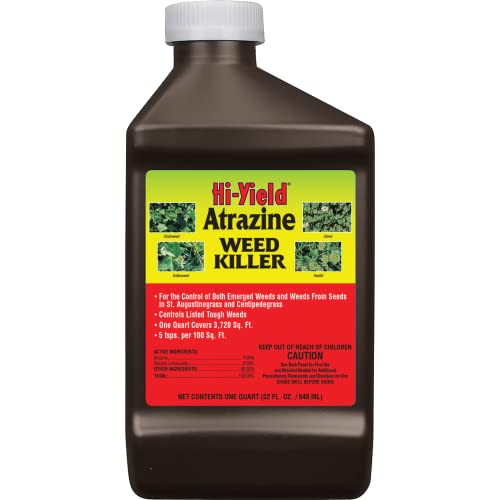
Hi-Yield Atrazine offers selective weed control with a focus on St. Augustine and Centipedegrass. The bottle handles up to about 3,720 square feet of lawn per 32-ounce container when used per label directions. It targets weeds such as henbit and clover, among others, helping to maintain a neat, weed-free lawn while preserving turf health when applied correctly.
Ortho WeedClear Lawn Concentrate

Ortho WeedClear Lawn Concentrate provides broad-spectrum control, including dandelion and clover, down to the root, with a ready-to-use approach when diluted per label. It’s designed to be safe on St. Augustinegrass (not Floratam) and several other turf varieties. The product emphasizes fast-acting results, with a focus on targeting weeds without harming the lawn when used as directed. Suitable for homeowners who prefer a concentrated formula for multiple applications.
Ortho WeedClear Lawns with Trigger Sprayer

This Ortho formulation with a trigger sprayer offers broad-spectrum weed control for a variety of turfgrasses, including St. Augustinegrass (not Floratam). It delivers results with one application and features a spray-ready design for convenience. It’s ideal for homeowners who want a quick, simple solution to treat weed patches without needing additional equipment beyond a standard sprayer.
Liquid Harvest Mesotrione – 8oz

Mesotrione-based products target a range of broadleaf species and grasses. The Liquid Harvest concentrate is designed to deliver pre-emergent and post-emergent control for lawn and turf grasses. It starts acting quickly upon application, with full weed death potentially taking 2–3 weeks. It’s labeled for use on St. Augustine grass (sod only) among other turf types and requires water activation. This option offers flexibility for mixed weed pressures and seasonal control strategies.
Buying Guide: Key Purchase Considerations
When selecting a weed killer for St. Augustine lawns, buyers should consider turf type, weed spectrum, application method, and safety. Here are several perspectives to inform a balanced decision:
- St. Augustine compatibility: Some products specify Floratam or non-Floratam varieties. If your lawn cultivar is Floratam, verify label restrictions and choose products explicitly labeled for St. Augustine or non-Floratam use as appropriate.
- Turf safety and phytotoxicity: Atrazine-based products can be effective but may pose turf injury risks if misapplied. Mesotrione-based options tend to be gentler on established turf when used as directed, but adherence to label instructions remains essential.
- Weed spectrum: For broader weed control, multi-weed formulations like Ortho WeedClear provide wide coverage (dandelion, clover, chickweed, etc.). If you target specific stubborn weeds, atrazine or mesotrione-focused products might be preferred.
- Application method: Ready-to-use sprays and trigger-sprayer solutions offer convenience, while concentrates require mixing. Consider your preferred workflow, including whether you have a compatible sprayer or want a simple bottle.
- Square footage and coverage: Each product lists coverage per quart or per bottle. Match your lawn size to the product’s coverage to avoid over- or under-application and to optimize value.
- Local regulations and environment: Some regions restrict atrazine use or require buffer zones around waterways. Always follow local guidelines and environmental safety considerations when applying herbicides.
- Seasonality and timing: Post-emergent options work best when weeds are actively growing. For pre-emergent control, consider products labeled for pre-emergence or seasonal timing guidance on the label.
In summary, the best choice depends on your lawn’s specific weeds, cultivar, and preferred method of application. For St. Augustine lawns seeking broad, reliable control, Ortho WeedClear products offer convenient, spray-ready options with broad weed coverage. For lawn owners prioritizing selective control and compatibility with St. Augustine, atrazine-based products from Southern Ag or Hi-Yield provide targeted solutions. Mesotrione-based products add a gentler option with strong post-emergent activity, particularly on common weeds within St. Augustine turf ecosystems.