Choosing the right soil tester helps you optimize nutrients, pH balance, and moisture for thriving plants. This guide highlights five reliable options that combine accuracy with user-friendly designs for American gardeners. Each product section includes a quick overview, test capabilities, and practical usage tips to maximize garden health without professional lab work.
| Product | Brand | Key Benefit |
|---|---|---|
| Rapitest Soil Test Kit | Luster Leaf | |
| MySoil Soil Test Kit | My Soil | |
| SONKIR Soil pH Meter MS02 | SONKIR | |
| YAMRON 4-in-1 Soil Tester | YAMRON | |
| Raintrip Soil Moisture Meter | Raintrip |
Rapitest Soil Test Kit for Gardens

The Rapitest kit from Luster Leaf is designed for quick at-home results. It analyzes soil pH and major plant nutrients—Nitrogen, Phosphorus, and Potash (NPK). The kit uses a capsule system with patented color comparators, enabling gardeners to test multiple spots across a lawn or garden. It includes all components needed for 20 tests (5 tests for each variable). This approach supports broader soil sampling, helping you identify nutrient hotspots or deficiencies that influence plant health and growth. For home gardeners prioritizing straightforward results, Rapitest provides a practical balance of simplicity and actionable data. To optimize results, test in multiple locations and follow up with corrective amendments as needed.
MySoil Soil Test Kit
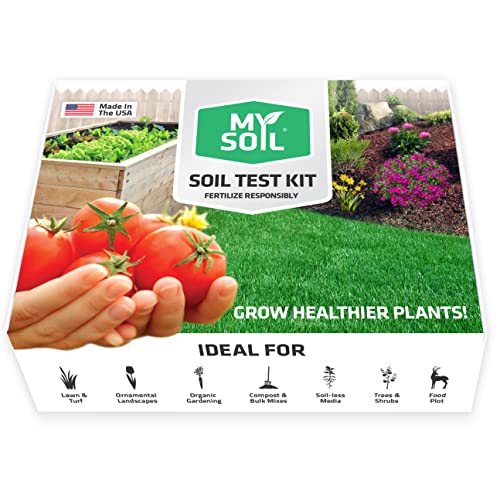
The MySoil kit emphasizes professional-grade accuracy with a focus on actionable recommendations. It provides lab-like results for 13 plant-available nutrient levels and pH, delivered after 6–8 days via mail-in analysis. This kit is suitable for lawn, vegetable gardens, flowers, trees, and more, accommodating diverse growing scenarios and soil types. Unlike home pH meters, MySoil aims to deliver precise nutrient profiles that guide tailored soil amendments, whether improving nitrogen availability or adjusting pH to optimize nutrient uptake. For gardeners seeking deep insight beyond basic pH, this option offers thorough analysis and practical cultivation guidance.
SONKIR Soil pH Meter MS02

The SONKIR MS02 is a 3-in-1 soil tester that covers moisture, pH, and sunlight. It is designed for ease of use with a single probe and a readout panel. Notably, it does not require batteries, which simplifies field testing. The device notes that a dry soil sample may yield unreadable results; watering the soil before testing can improve accuracy. This model is well-suited for quick checks across gardens, lawns, or farms where fast readings are preferred and battery-free operation is advantageous. The compact design makes it a practical tool for frequent monitoring rather than in-depth soil characterization.
YAMRON 4-in-1 Soil Tester

The YAMRON 4-in-1 model combines moisture, pH, temperature, and sunlight readings in a backlit LCD display. It helps gardeners decide when to water, adjust soil pH, and ensure plants receive sufficient light. The device uses an LCD with a backlight, making it usable in low-light conditions. It requires AAA batteries (not included) and includes a sensitivity-adjustment capability to refine measurements for different plant needs. This tester is particularly valuable for gardeners seeking a single-unit solution to monitor multiple environmental factors that influence plant performance in real time.
IRTOV 4-in-1 Soil Test Meter

The IRTOV model offers a four-function measurement: pH, moisture, temperature, and light. Its LCD display provides a clear readout, supporting users who want to monitor multiple soil conditions without juggling separate tools. This unit emphasizes a user-friendly design with straightforward operation, suitable for gardeners who prefer a compact device without sacrificing the ability to track important soil parameters over time. For those managing diverse plant collections or seasonal changes, the 4-in-1 approach can streamline routine checks and adjustments.
7-in-one Soil Test Kit by TryOpen

This TryOpen device expands testing to seven functions, including moisture, pH, sunlight, fertility, and both soil and air temperature and humidity, all via an LCD display. The multi-function approach provides a comprehensive snapshot of growing conditions for gardens, lawns, and indoor plants. Its design emphasizes ease of use for beginners while delivering enough data to guide timely interventions, such as adjusting irrigation, light exposure, or fertilization. The included-temperature and humidity data help align care with seasonal shifts and microclimates in American gardens.
Raintrip Soil Moisture Meter

The Raintrip device is a 4-in-1 tester focusing on soil moisture, pH, nutrients, and light. It emphasizes a single-probe design intended to minimize root disturbance during insertion. The meter includes a free plant growing guide and sandpaper, appealing to hobbyists seeking educational resources alongside practical testing. While the single-probe design reduces plant damage, it may introduce cross-sensor interactions if used too frequently in tight root zones. This option suits gardeners who want a cost-effective, all-in-one solution with educational perks.
Buying Guide: Key Purchase Considerations
When selecting a soil tester for your garden, consider the following factors to ensure you choose a device that matches your needs:
- Test scope: Determine whether you need pH only, or a broader panel including moisture, nutrients, temperature, and light. Multi-function models save space but may trade off some precision for specialized tests.
- Accuracy and method: Mail-in or lab-grade kits (like MySoil) provide higher nutrient accuracy and actionable recommendations, while at-home meters and color-compare kits are faster and more convenient for routine checks.
- Ease of use: Look for clear readouts, backlit displays, and battery requirements. Battery-free designs are convenient but may limit features in low-light environments.
- Sampling strategy: For uniform results, test in multiple garden areas, especially in areas with different soils or recent amendments. Consider the number of tests included in the kit and whether you’ll need extra supplies for ongoing testing.
- Maintenance and durability: Probes should be robust enough for repeated use. Some models use replaceable batteries or probe materials that resist corrosion for long-term use.
- Delivery of guidance: Some kits offer tailored nutrient recommendations, while others provide general ranges. Choose based on how much actionable guidance you want beyond raw numbers.
- Budget and value: Compare initial cost against the number of tests included, the depth of analysis, and the long-term benefits of improved plant performance.
In practice, a mixed approach can be advantageous: use a quick at-home tester for routine monitoring and a mail-in kit periodically for a deeper nutrient analysis. This combination helps maintain plant health while guiding targeted soil amendments, ensuring resilient garden growth across seasons.