Growing vegetables indoors can be a year-round endeavor when you select the right grow lights. The following picks offer full-spectrum LEDs, adjustable heights, timers, and dimming to support seed starting, vegetative growth, and fruiting. Each option is suitable for vegetables and designed to maximize photosynthesis without sunlight. Read on for a concise buying guide and five top picks with key features summarized for quick comparison.
| Product | Brand | Full Spectrum | Key Feature |
|---|---|---|---|
| SYEIORAOM Grow Lights | SYEIORAOM | Yes (White & Red LEDs) | Adjustable gooseneck and telescopic pole |
| GooingTop LED Grow Light | GooingTop | Yes (Full Spectrum) | 5-Level dimmable with auto on/off timer |
| LBW Grow Lights With Stand | LBW | Yes (214 LEDs) | Stand with 75″ tripod and 4/8/12H timer |
| LEOTER Grow Light | LEOTER | Yes (Full, Red/Blue) | 10 dimmable levels, 3 timer modes |
| yadoker LED Growing Light | yadoker | Yes (Full Spectrum) | Height adjustable up to 61.1 inches, 10-level dimmable |
SYEIORAOM Four-Head Grow Light

The SYEIORAOM grow light features a four-head LED setup with a full spectrum, including red and white LEDs designed to improve photosynthesis and promote vegetable growth. Its adjustable gooseneck and telescopic pole facilitate precise light positioning, allowing you to place lights at optimal distances from vegetables as they grow. The 72 LED beads deliver broad coverage for compact indoor setups, reducing the need for natural sun exposure.
GooingTop LED Grow Light With Clip
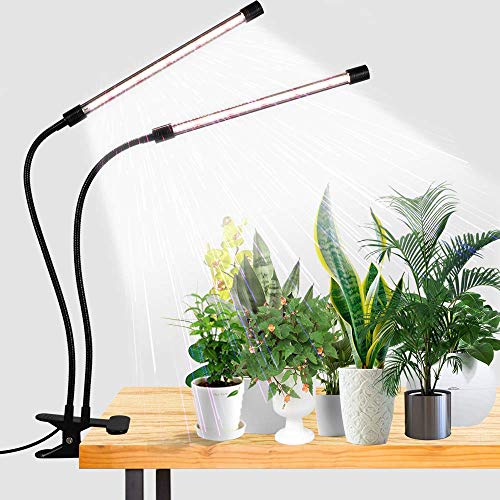
The GooingTop clip-on grow light provides a 6000K white light with a full spectrum of LEDs (10 red and 74 white). It is designed for indoor plants, offering a high color rendering index (CRI ~95) for bright, natural-like illumination. Built-in timer options (4, 8, or 12 hours) help automate daily light cycles. A flexible gooseneck and strong clamp enable versatile placement to suit various vegetable setups.
LBW Grow Lights With Stand

LBW’s full-spectrum fixture uses 214 LED chips across white and red spectra to closely mimic natural sunlight. The unit comes with a tall stand (75 inches) and offers four, eight, or twelve-hour timers. Six brightness levels let you adapt lighting to the growth stage of your vegetables. The design emphasizes heat dissipation and steady performance, suitable for larger indoor vegetable projects requiring deeper coverage.
LEOTER Upgraded Grow Light
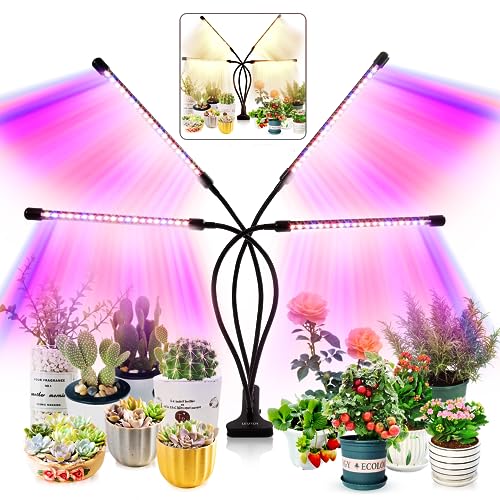
LEOTER offers an upgraded LED mix with 80 diodes, including red, blue, and full-spectrum options to accommodate different plant growth stages. The light supports three timer modes (3H, 9H, 12H) and 10 dimmable levels to tailor intensity. A compact, adjustable gooseneck makes it easy to direct light at developing vegetables, supporting seedling growth and vegetative growth in tighter spaces.
yadoker Full Spectrum Grow Light

The yadoker light features 72 LEDs across a full spectrum (380nm-800nm) with warm white, red, and blue channels. It includes a tall height-adjustable stand up to 61.1 inches and a telescoping pole for flexible positioning. Ten dimming levels allow precise control over light intensity for vegetables at different growth stages, making it suitable for larger plantings or multiple plants in close proximity.
Buying Guide
Key considerations when choosing grow lights for vegetables:
- Full spectrum and spectrum balance: Look for lights offering red and blue wavelengths essential for photosynthesis, plus white or full-spectrum options to mimic natural sunlight.
- Intensity and coverage: Higher PPFD and larger coverage are important for vegetables, especially for seedlings and leafy greens. Ensure the fixture size fits your space and plant count.
- Adjustability: Gooseneck joints, telescoping poles, and height-adjustable stands help maintain proper light distance as plants grow and fill space.
- Timing features: Built-in timers (4/8/12 hours) promote consistent daily light cycles, which boosts uniform growth and reduces manual effort.
- Power options: USB-powered units can be convenient for compact setups; AC-powered fixtures are often more powerful for larger gardens.
- Energy efficiency and heat management: LEDs are efficient, but consider heat dissipation features to protect plants and extend the light’s life.
- Durability and ease of setup: Lightweight, easy-install fixtures with clear instructions are preferable for quick deployment in kitchens, basements, or closets.
When comparing options, weigh how many vegetables you plan to grow, the size of your growing area, and whether you prefer a ready-made tripod or a clip-on/desk setup. Multiple fixtures can provide diverse angles and coverage, which helps prevent shading and ensures even light for all plants.