For indoor gardeners, CFL lights offer compact, energy-efficient options that support year-round plant growth. This article reviews five well-rated CFL and full-spectrum bulbs, highlighting lighting specs, energy use, and suitability for different growing stages. Each product includes a quick summary and practical considerations to help you choose the right fit for your setup.
| Product | Brand | Watt Equivalent | Color Temperature | Key Benefit |
|---|---|---|---|---|
| SunBlaster SL0900151 Set | SunBlaster | 13W x4 | 6400K | Year-round grow capability |
| Wiyifada 3 Pack A19 | Wiyifada | 9W each | Full spectrum | Energy-efficient growth light with broad spectrum |
| Agrobrite FLC26D | Hydrofarm | 26W | 6400K | Low-cost CFL option |
| EMART 105W Spiral (2 Pack) | EMART | 105W (2-pack) | 5500K | Bright daylight for photos and growth |
| SANSI Full Spectrum 36W | SANSI | 36W | 4000K | Efficient spectrum with optical design |
Below are five products aligned with the “Best CFL lights for growing” topic. Each section includes a concise overview, key features, and notes on how it supports indoor plant development.
SunBlaster CFL Grow Light Set

The SunBlaster set includes four 13-watt CFL bulbs that deliver a bright 6,400 Kelvin daylight spectrum. Designed for year-round indoor plant use, these bulbs simulate natural sunlight to support vegetative growth and foliage development. Energy efficiency is a noted feature, with a combined lumen output around 3,600 lumens across the four bulbs, making it suitable for small to medium indoor gardens or terrariums. The compact design helps minimize heat output while maintaining adequate light intensity for leafy greens and herbs.
Wiyifada 3 Pack A19 Grow Bulbs

This 3-pack features full-spectrum A19 bulbs with a 150-degree light distribution. Each bulb replaces up to 100W incandescent equivalents with 9W consumption, delivering energy savings of more than 85%. The spectrum covers 400–740 nm to support all growth stages, from seedlings to mature foliage. A robust basic cooling design helps extend lifespan, with an estimated 20,000 hours. The bulbs are suitable for general indoor gardening, microgreens, and potted plants needing steady, even light.
Agrobrite FLC26D 26-Watt CFL
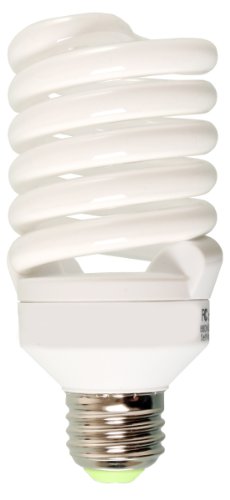
The Agrobrite FLC26D is a 26-watt spiral CFL bulb that yields a 130-watt incandescent equivalent, providing an efficient option for growing seedlings or compact indoor gardens. The 6400K daylight color makes it versatile for vegetative growth and overall plant health. Its compact spiral form reduces ballast load and fits into many standard fixtures. It’s UL Listed, offering basic safety assurance for hobby growers and small setups.
EMART 105W Spiral CFL Bulbs (2-Pack)

EMART offers two 105W daylight spiral bulbs, with an output often described as equivalent to 500W. Each bulb operates at 5500K, providing a bright, soft white light that blends well with indirect sunlight. The set is marketed for photography but is widely used as a grow light due to high lumen output and broad coverage. The E26/E27 sockets ensure broad compatibility with many fixtures, enabling easy upgrades for larger indoor gardens or DIY grow kits.
SANSI Full Spectrum 36W Bulb

SANSI’s 36W full-spectrum bulb uses a secondary optical design to optimize light distribution, with a PPF of 65.6 μmol/s and PPFD at 1 ft around 265.58 μmol/s/m². The ceramic heat sink and COc technology help reduce thermal resistance, supporting longer life—up to 25,000 hours. The 4000K daylight tone sits between cool and warm white, making it suitable for vegetative growth and young plants. It’s a practical option for larger grow spaces or fixtures needing higher-quality light alignment.
Buying Guide: Key Purchase Considerations
- Light spectrum: Seedlings benefit from full-spectrum or balanced daylight tones (around 5000–6500K). For flowering stages, consider bulbs with broader red wavelengths or higher PPFD values.
- Wattage and lumens: Match wattage to your grow space. Higher lumen outputs support more intense light but may require better ventilation to avoid heat buildup.
- Fixture compatibility: Check base types (E26/E27) and form factors (bulbs vs. spirals) to ensure compatibility with existing fixtures and reflectors.
- Energy efficiency: CFLs are generally economical, but confirm watt-for-watt efficiency and lifespans. Longer-lasting bulbs reduce replacement frequency.
- Heat management: Indoor growing benefits from bulbs with lower heat output in small spaces. Look for bulbs labeled as cool-running or with heat-dissipating designs.
- Durability and safety: UL-listed or equivalent safety certifications provide added assurance for home use and hobby growing.
- Installation flexibility: Adjustable stands, flexible goosenecks, or clamp bases help position light precisely over plants and accommodate growth.
- Longevity and reliability: Longer bulb life minimizes maintenance. Consider multi-pack options for scalable setups as plants expand.
- Use cases: Distinguish between bulbs intended for general lighting replacements, photography, or dedicated horticultural growth to avoid inefficiencies.