The indoor plant care landscape includes a variety of products designed to combat mites, pests, and diseases. This guide focuses on reliable, ready-to-use options that many gardeners rely on to protect houseplants, herbs, and ornamental varieties from mite damage and related issues. Below are five highly relevant products, each with practical features to help you decide which might fit your needs best.
Summary of chosen products:
| Product | Brand | Key Benefit |
|---|---|---|
| BioAdvanced Houseplant Insect & Mite Control | BioAdvanced | Direct contact kill for mites and other listed pests; indoor/outdoor use |
| BioAdvanced 3 in 1 Insect, Disease & Plant Mite Control | BioAdvanced | Triple protection as fungicide, miticide, and insecticide |
| Trifecta Crop Control Ready to Use | Trifecta | All-natural formula tackling pests and powdery mildew |
| Bonide Captain Jack’s Mite-X | Bonide | Indoor/outdoor mite-focused spray for common houseplant pests |
| Neudorff Indoor Plant Spray for House Plants & Greenhouse | Neudorff | Broad-spectrum, contact-kill spray with multiple targets |
BioAdvanced Insect & Mite Control For Plants
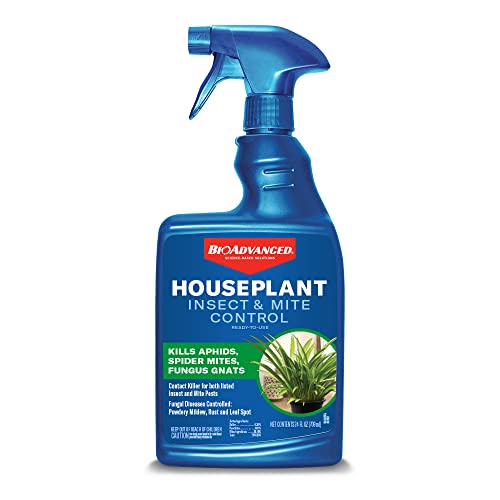
BioAdvanced Houseplant Insect & Mite Control is a ready-to-use solution that targets a range of pests, including fungus gnats and spider mites. It is suitable for both indoor and outdoor use on flowers, herbs, and houseplants. The product emphasizes contact kill, making full coverage important—spray thoroughly to reach new shoots and undersides of leaves where pests often hide. This formulation helps mitigate mite populations by delivering a kill at the point of contact and can complement routine preventive spraying in dense indoor plant collections.
BioAdvanced 3 in 1 Insect, Disease & Plant Mite Control

This triple-action spray provides insect, disease, and mite control in one product. It targets aphids, whiteflies, and other common pests while also addressing diseases like powdery mildew and rust. By combining a miticide with fungicidal properties, it offers a convenient option for homes with diverse plant inventories where multiple threats may arise. For best results, apply evenly to foliage and stems, ensuring thorough coverage of both tops and undersides of leaves.
Trifecta Crop Control Ready to Use
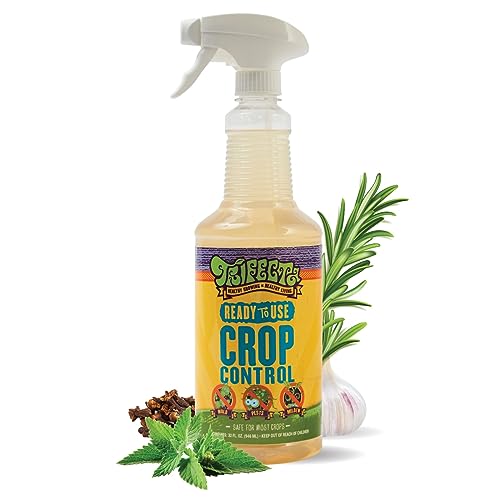
Trifecta Crop Control blends an all-natural, plant-based formula to combat spider mites, aphids, whiteflies, and fungus gnats. This product is designed to be safe for edible crops and is described as biodegradable and eco-friendly, making it suitable for organic gardening practices. It provides coverage that helps suppress pest populations while supporting plant health. The formula also includes a powdery mildew fungicide aspect, offering broader disease management for indoor plants.
Bonide Captain Jack’s Mite-X

Captain Jack’s Mite-X is a spray product formulated to address mites and other nuisance pests on indoor and outdoor plants. It is designed with indoor plant care in mind, focusing on mites, thrips, and aphids. The broad-spectrum capability helps manage a range of pests that commonly threaten houseplants, supporting healthier foliage and reduced pest pressure in indoor environments where mites can proliferate in warm, dry conditions.
Neudorff Indoor Plant Spray

Neudorff Indoor Plant Spray is a broad-spectrum contact insecticide designed for houseplants and greenhouses. It targets a wide array of pests, including spider mites, scales, and aphids, by delivering immediate contact kill. The product is marketed as suitable for organic gardening and is compatible with edible crops when used as directed. It also mentions effectiveness against eggs and multiple life stages, supporting longer-term mite control when used as part of a regular spraying routine.
Buying Guide: Key Considerations For Mite Control On Indoor Plants
- Target pests: Identify whether you are dealing with spider mites, broad mites, fungus gnats, aphids, or other insects. Some products emphasize mites specifically, while others provide broader pest and disease control. Choose a product whose target pests align with your plant issues.
- Mode of action: Consider contact vs. systemic solutions. Contact sprays act on pests that are hit by the spray, while systemic products move within the plant to prevent or reduce feeding by pests. For heavy infestations, a combination approach (seasonal rotate modes) can be effective.
- Plant safety: Review label directions for indoor use, including any restrictions on edible plants and harvest timing. Some formulas are safer for a broader range of plants, including ornamentals and herbs, while others may have restrictions.
- Residue and odor: If you have a sensitive indoor environment, look for products described as low-residue or odor-free. However, note that some formulations may have detectable scents due to essential oils or active ingredients.
- Frequency and coverage: Assess the spray’s coverage needs. Dense plant canopies require thorough application on both upper and lower leaf surfaces. Pay attention to reapplication intervals and safety cautions for pets and people.
- Compatibility with beneficials: If you rely on beneficial insects or keep a diverse ecosystem in your indoor garden, select products that are safer for non-target organisms. Some all-natural formulas claim compatibility with beneficial organisms when used as directed.
- Organic and OMRI listings: For organic-minded growers, consider products with OMRI listings or stated organic standards. These products support organic gardening goals while delivering pest control.
- Long-term management: Mite control often requires repeated applications and integrated practices (quarantine new plants, clean debris, and maintain humidity). Use these products as part of a broader preventive strategy to reduce recurring mite problems.