Plant pests like mites can quickly threaten the health of houseplants, patios, and gardens. This guide highlights top mite control products available on Amazon and explains how to select the best option for indoor and outdoor use. The selections cover contact sprays, systemic treatments, and natural solutions designed to reduce mite populations while protecting beneficial insects and edible crops. Use the buying guide to compare application methods, safety, and performance across different environments.
Summary of chosen products:
| Product | Brand | Key Benefit | Form |
|---|---|---|---|
| BioAdvanced Houseplant Insect & Mite Control, 24 oz | BioAdvanced | Contact killer for mites and common houseplant pests; indoor/outdoor use | Ready-to-use spray |
| BioAdvanced 3 in 1 Insect, Disease & Plant Mite Control, 24 oz | BioAdvanced | Triple protection against insects, diseases, and mites | Ready-to-use spray |
| Trifecta Crop Control Ready to Use | Trifecta | All-natural, plant-based formula for pests and powdery mildew | Ready-to-use spray |
| Grower’s Ally Spider Mite Spray | Grower’s Ally | Organic, OMRI-listed mite killer and repellent | Ready-to-use spray |
| BioAdvanced 3-in-1 Insect and Mite Plant Bug Spray, 32 oz | BioAdvanced | Three-in-one control for insects, mites, and diseases | Ready-to-spray |
The following sections provide more detail on each product, including how the formula targets mites, pest ranges, and suitable use scenarios.
BioAdvanced Houseplant Insect & Mite Control
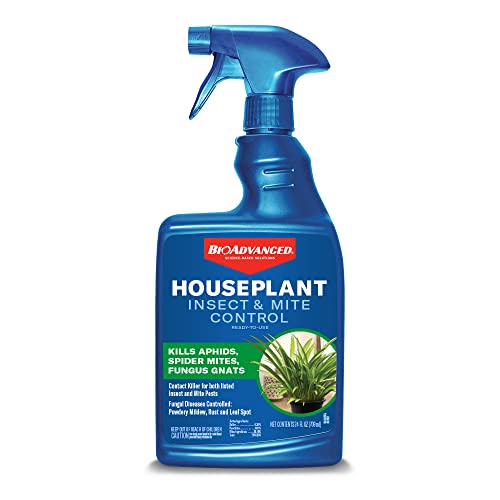
This ready-to-use spray targets mites on houseplants and is effective against pests such as aphids, whiteflies, and lace bugs. It can be used indoors and outdoors, offering protection for flowers and herbs as well. For mites, thorough coverage of plant surfaces—especially newly formed shoots and the undersides of leaves—is essential for effective control. This product works by contact, killing pests on contact and helping to reduce populations quickly in indoor settings.
BioAdvanced 3 in 1 Insect, Disease & Plant Mite Control

This triple-action formula provides insect control, disease management, and mite suppression in one application. It protects against aphids, whiteflies, and other listed pests while also treating diseases such as black spot, powdery mildew, rust, and scab. Suitable for a variety of ornamental plants, this option is designed for broader protection in both indoor and outdoor environments, reducing the need for multiple products.
Trifecta Crop Control Ready to Use
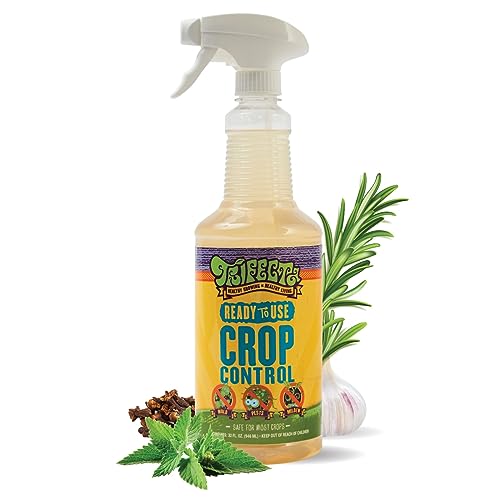
Trifecta Crop Control combines an all-natural, plant-based formula with a potent fungicide and miticide action. It targets spider mites, whiteflies, aphids, and powdery mildew, making it suitable for indoor and outdoor plants, including edible crops. The product emphasizes environmental safety, stating it is biodegradable and safe for beneficial insects when used as directed. It dries quickly and leaves no noticeable residues or odors, appealing to home gardeners seeking organic-compatible solutions.
Grower’s Ally Spider Mite Spray
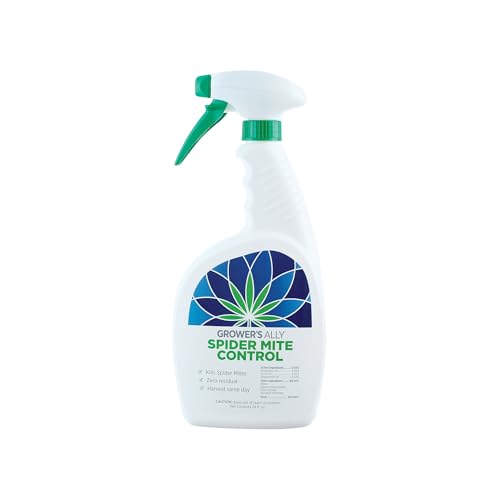
This OMRI-listed spray uses a natural blend of rosemary, clove, and peppermint oils, positioning itself as a bee- and pet-friendly option. It kills and repels mites on contact, including both adult and nymph stages, and is designed for preventative use to help ward off future infestations. The natural formulation avoids synthetic pesticides and conforms to organic gardening standards, making it suitable for gardeners who prioritize minimal chemical inputs.
BioAdvanced 3-in-1 Insect and Mite Plant Bug Spray

This 3-in-1 formulation is designed for outdoor plants such as roses, flowers, shrubs, and trees. It provides insect control (including aphids and mites) alongside disease management. The spray is described as capable of treating extensive outdoor areas, up to a large coverage area, making it suitable for larger garden setups where mites and other pests threaten plant health.
Bonide Systemic Houseplant Insect Control

Bonide’s systemic granules deliver long-lasting protection by moving through the plant to guard against listed insects for up to eight weeks. Used primarily indoors on container plants, these granules are absorbed via roots and protect against pests like mealybugs, aphids, and scale. Since it relies on systemic action, it is important to apply according to label directions to avoid issues with plants that may be sensitive to systemic products. It is not intended to disrupt non-feeding insects.
Buying Guide: Key Purchase Considerations
- Target pests and scope: Determine whether you need mite-specific control, broad-spectrum insect control, or disease mitigation in addition to pest suppression. Some products combine multiple functions (insect, mite, and disease control), which can simplify maintenance but may have broader active ingredients.
- Indoor vs outdoor use: Indoor-friendly products should minimize strong odors and residue while still delivering effective contact or systemic action. Outdoor formulas may emphasize broad coverage and longer-lasting protection against environmental exposure.
- Mode of action: Contact sprays kill pests on contact, while systemic products are absorbed by the plant and provide ongoing protection. For mites, a combination approach (contact plus systemic) can be effective in many setups.
- Safety and organic compatibility: OMRI listings and FIFRA exemptions indicate suitability for organic gardening. If pets, children, or pollinators are a concern, prefer plant-based or OMRI-listed options and follow label directions to minimize exposure.
- Edible crops and residues: For edible plants, choose products labeled safe for use on vegetables or herbs, and consider residue considerations and pre-harvest intervals if applicable.
- Application method and frequency: Some products require repeated applications for persistent mite infestations. Review label timing, spray coverage recommendations, and whether multiple applications are needed for season-long protection.
- Impact on beneficials: Synthetic miticides may harm beneficial insects. When possible, select selective controls that target mites with minimal disruption to pollinators and natural predators.
- Plant type and size: Ensure the product is suitable for your plant species and container size. Some formulations are designed for houseplants, while others are intended for garden beds or larger shrubs.
In practice, buyers should assess their specific environment—indoor houseplants, outdoor containers, or large garden plots—and match the product’s action and safety profile to their goals. For households with sensitive pets or children, prioritizing organic or plant-based options can reduce risk while still achieving mite suppression.