Automatic soil moisture meters help garden and houseplant owners water with precision, saving time and reducing overwatering. The following selected tools come from trusted brands and are designed for indoor and outdoor use, with battery-free options and deep-probe designs for larger pots. Use this guide to compare features, readability, and durability before choosing the right meter for your plants.
| Product | Brand | Key Feature |
|---|---|---|
| XLUX Soil Moisture Meter | XLUX | Immediate reading; three-zone dial; no batteries |
| XLUX Long Probe Deep Use (2 Pack) | XLUX | 5.5-inch probe for deep soil; easy readability |
| apine Soil Moisture Meter | apine | Battery-free; simple two-to-four inch probe; quick read |
| UNIWA Soil Moisture Meter (2-Pack) | UNIWA | Double-needle detection; portable; battery-free |
| Hathdia Soil Moisture Meter | Hathdia | No batteries; immediate readings; long probe |
XLUX Soil Moisture Meter
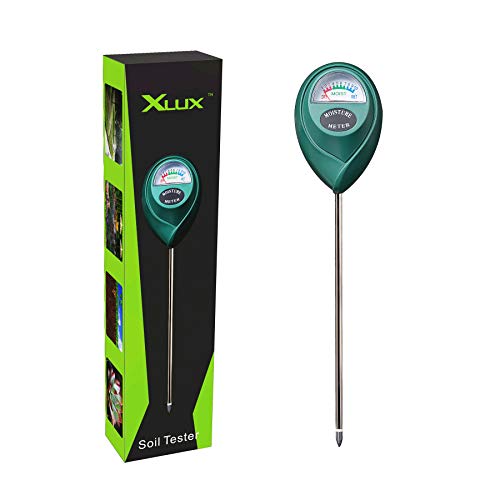
The XLUX Soil Moisture Meter provides a direct readout of soil moisture across three zones on a large dial. Its quick-response probe delivers an immediate moisture level, helping you decide when to water. It is designed for use in pots, beds, and gardens, but the metal tip can corrode if left in soil for extended periods, so it should be removed after a brief measurement.
XLUX Long Probe Deep Use (2 Pack)

This 2-pack features a 5.5-inch longer probe, enabling measurement at the bottom of larger, deeper pots. The large dial remains easy to read with three zones and ten scales. As with other meters, avoid leaving the probe in soil for long periods to prevent metal corrosion, and confirm readings promptly for best watering decisions.
XLUX Long Probe Deep Use (Single)

This long-probe XLUX model extends measurement depth for deep pots and outdoor plants. It maintains an easy-to-read dial and immediate feedback to guide watering decisions, with emphasis on preventing overwatering in larger containers. Proper usage includes brief probes and avoiding prolonged soil contact to protect the metal tip.
apine Soil Moisture Meter
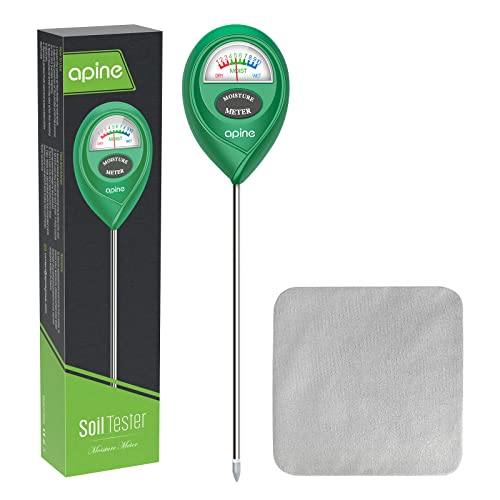
apine offers a battery-free, simple moisture meter ideal for quick readings. Insert the probe two to four inches into the soil for a few seconds to obtain a reading. A wiping cloth is included to clean the probe for more accurate results, making it suitable for routine monitoring of indoor and outdoor plants.
UNIWA Soil Moisture Meter (2-Pack)
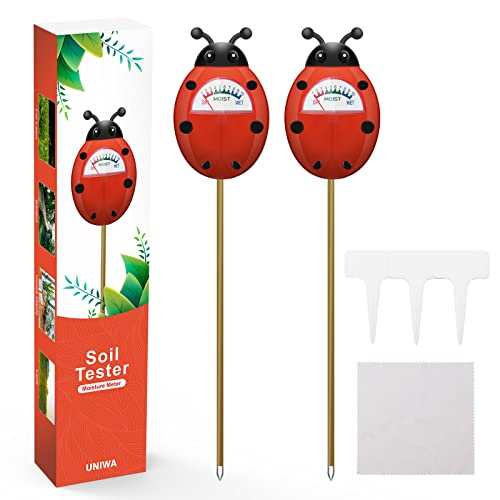
UNIWA emphasizes a double-needle detection system to enhance speed and accuracy. The compact, battery-free meter features a clear dashboard with an arrow pointer and a wide-scale interval, designed for both indoor and outdoor use. It’s particularly convenient for container plants where precise moisture management matters.
Hathdia Soil Moisture Meter
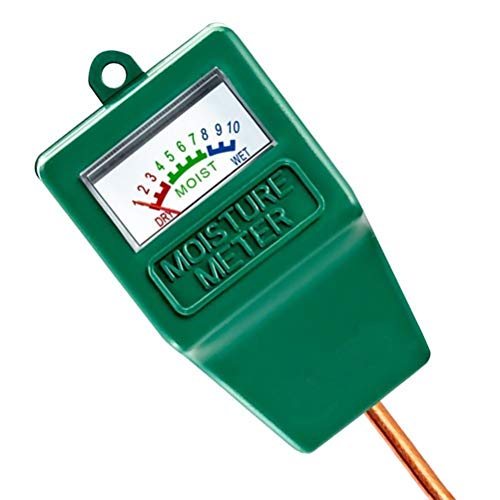
Hathdia’s meter offers a battery-free design with a seven-to-eight inch probe, suitable for larger pots and deeper soils. The dial provides immediate readings to help you decide whether to water. The device aims for simple operation and quick, actionable data for varied plant types, from houseplants to garden beds.
Buying Guide: Key Considerations When Choosing a Plant Water Meter
- Probe length: For deep pots or outdoor plants, longer probes reach moisture at the root zone in heavier soil. Short probes work well for small pots and shallow soil.
- Readability: Large dials with clear zones (dry, moist, wet) reduce guesswork and speed watering decisions, especially for beginners.
- Battery-free design: Battery-free meters avoid replacement costs and power concerns, but ensure the probe is robust and corrosion-resistant for long-term use.
- Durability: Metal tips can corrode if left in soil; remove meters after testing or follow manufacturer guidance to protect longevity.
- Indoor vs outdoor use: Some meters are designed for containers, while others offer gauges that tolerate outdoor soil conditions and direct sun exposure.
- Maintenance: Wipe probes clean before each use to maintain accuracy. Some meters include a cloth for this purpose.
- Special features: Dual-needle designs and extended probes offer nuanced readings for pot depth and soil type; consider how you water different plant categories (succulents vs. tropicals).