The right pool sweeper can dramatically reduce maintenance time by delivering reliable, full-coverage cleaning for inground pools. This article compares five strong options across pressure-side, suction-side, and robotic approaches, highlighting how each cleaner handles floors, walls, and debris. Read on to find a model that fits your pool size, surface, and booster pump setup.
Product Summary
| Product | Brand | Type | Key Strengths |
|---|---|---|---|
| Polaris Vac-Sweep 280 | Polaris | Pressure-Side | Fast three-hour cleaning, wide debris inlet, supports diverse surfaces |
| MAKHOON Upgrade Pool Pressure Side Sweeper | MAKHOON | Pressure-Side | Four-wheel design, easy maintenance, robust debris handling |
| Zodiac G3 Suction-Side | Zodiac | Suction-Side | Maneuverable wheel deflector, works with various pool surfaces |
| Hayward Poolvergnuegen W3PVS20JST | Hayward | Suction-Side | Two-wheel drive, strong debris passage, good for mid-sized pools |
| Polaris MAXX Premium Suction-Side | Polaris | Suction-Side | All-in-one surface cleaning with Halo technology |
Polaris Vac-Sweep 280 Pressure-Side In-ground Pool Cleaner

The Polaris Vac-Sweep 280 is a pressure-side cleaner powered by a separate booster pump. Dual venturi jets generate strong vacuum power to clean most inground pools in about three hours. It is designed to work with different pool shapes and surfaces, including vinyl, fiberglass, gunite, pebble, and tile. A large 2.25″ inlet helps pick up bigger debris that other cleaners might miss, providing complete coverage of the floor and walls. This model is particularly suitable for pools with a dedicated booster pump system and a wide debris bag for extended cycles without frequent emptying.
MAKHOON Upgrade Pool Pressure Side Sweeper

The MAKHOON pressure-side sweeper emphasizes durability, with upgraded hose and parts designed to withstand long cleaning sessions. It offers efficient cleaning with a design that covers more ground and works best when paired with an appropriate booster pump. The device is noted for easy maintenance, with parts replacement available through Amazon and debris bag replacements that are compatible with related models. If a full pool clean isn’t achieved in one cycle, adjusting jet power direction can help tailor performance to your pool geometry.
Zodiac G3 Suction-Side Inground Vacuum Pool Cleaner

The Zodiac G3 is a suction-side cleaner designed for inground pools. It attaches quickly to the skimmer or dedicated suction line and is compatible with low-flow and variable-speed pumps. The three-step setup is simple: attach the disc, wheel deflector, and hose, then connect. Its wheel deflector improves maneuverability in tight corners, helping it reach more of the pool’s surface. Suitable for vinyl, tile, gunite, and fiberglass surfaces, the G3 is a flexible option for many standard pool configurations.
Hayward W3PVS20JST Poolvergnuegen Suction Cleaner
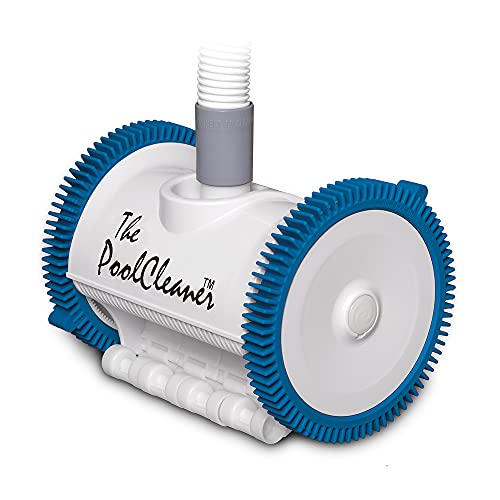
The Hayward Poolvergnuegen W3PVS20JST uses patented self-adjusting turbine vanes to deliver maximum power at any flow, and it features a two-wheel drive for reliable cleaning across most mid-sized inground pools up to 16′ x 32′. Its durable tire treads improve climbing ability and obstacle navigation, enabling effective cleaning of common pool features and debris-heavy areas. This model is well-suited for homeowners seeking solid performance with straightforward setup.
Polaris MAXX Premium Suction-Side Automatic Pool Cleaner
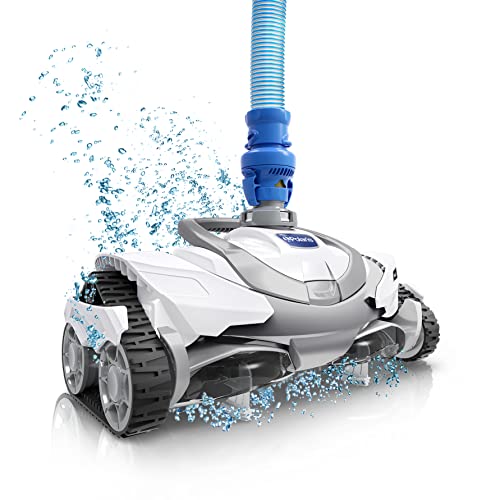
The Polaris MAXX Premium offers suction-side automatic cleaning with a focus on all inground surfaces, from the floor to the waterline. It features active scrubbing brushes that aggressively dislodge stubborn debris and direct particles toward the suction inlet. HALO Technology helps manage fine sand and larger debris by providing unobstructed debris clearance, enhancing overall cleaning efficiency. This model suits pools needing thorough debris removal with focused scrubbing action and reliable suction performance.
Buying Guide: Key Purchase Considerations
- Pool type and surface compatibility: Confirm the cleaner is rated for your pool’s surfaces (vinyl, fiberglass, gunite, pebble, tile) and that it matches your pool dimensions.
- Power and plumbing requirements: Pressure-side cleaners require a booster pump; suction-side models depend on the pool’s returns or skimmer. Robotic cleaners are self-contained but require a power outlet and sometimes a lead to the pool’s wall.
- Cleaning coverage and cycle time: Consider cleaners offering floor-to-wall cleaning, debris scrubbing, and rapid cycle times (e.g., around 3 hours) for busy households.
- Maintenance needs: Check how easy it is to replace bags, hoses, and wear parts. Models with universally compatible bags and widely available parts tend to reduce total ownership costs.
- Deck space and installation: Some cleaners install quickly with minimal tools, while others may require professional setup (especially booster-pump-based systems).
- Energy efficiency and noise: For energy-conscious buyers, evaluate motor efficiency and any reported noise levels during operation.
- Budget and longevity: While premium models may offer advanced scrubbing and longer warranties, more affordable options can still provide reliable daily cleaning with proper maintenance.
- Customer support and parts availability: Choose brands with robust customer service and readily available replacement parts in the U.S.
Comparative Perspectives
If you want maximum automation and minimal manual input, robotic cleaners offer flexible coverage and wall-climbing features, but they require charging and regular maintenance. For consistent, steady cleaning with dependable coverage across most pool shapes, pressure-side cleaners are strong because of booster-pump power and wide suction. Suction-side cleaners tend to be quieter and simpler to install, though they rely on the pool’s pump performance. When choosing, align the model with your existing equipment, pool size, and how much debris your family generates during the swimming season.
Additional Notes on Installation and Maintenance
Regular bag and debris removal keeps cleaner performance consistent. If you notice reduced suction or slow cleaning cycles, inspect hoses for kinks, verify booster pump operation (for pressure-side models), and confirm there are no clogs in the intake or filter lines. For robotic cleaners, ensure the battery or charge system remains in good condition and that brushes are replaced per the manufacturer’s schedule. A properly matched combination of cleaner features and pool setup yields optimal cleanliness with less manual effort.