Maintaining healthy indoor plants often comes down to reliable watering. The right irrigation system can deliver consistent moisture, prevent overwatering, and free you from daily plant care. Below is a focused guide to five popular options, each designed to keep 10–15 potted plants hydrated with minimal effort. The selections emphasize programmable timers, cycle-and-soak watering, dual power options, and self-watering stakes—covering a range of budget, setup, and preference scenarios.
| Product | Brand | Key Benefit |
|---|---|---|
| Automatic Plant Waterer Indoor Self Watering System for 15 Potted Plants | beday | Programmable, humidity detection for up to 15 pots |
| RAINPOINT Large Display Automatic Plant Waterer Indoor | RAINPOINT | Cycle & soak mode; broad timing options |
| [2025 Upgraded] Automatic Watering System, 15 Potted Indoor Houseplants | moistenland | Customizable schedules; water-saving design |
| RAINPOINT Smart Automatic Watering System Pot Plants | RAINPOINT | Dual power, app control, even distribution |
| Blumat Classic Self-Watering Stakes (12 Pack) | Blumat | Self-watering stakes with siphon action |
These picks illustrate how modern irrigation systems adapt to different plant setups, from hands-off timers to moisture-aware solutions. Each option supports a range of plant types, room conditions, and power sources, helping you tailor watering to your unique indoor garden.
Beday Automatic Plant Waterer Kit For 15 Pots

The Butler-grade watering system provides precise hydration for up to 15 pots. It emphasizes automatic scheduling and reliable performance, making it suitable for journeys or busy weeks. The primary advantages are stable water pressure and broad reach to distant pots, ensuring even plants receive adequate moisture. The setup is designed to be “worry-free” once programmed, offering a dependable plant caretaker that keeps your indoor garden lush in your absence.
RAINPOINT Large Display Automatic Plant Waterer
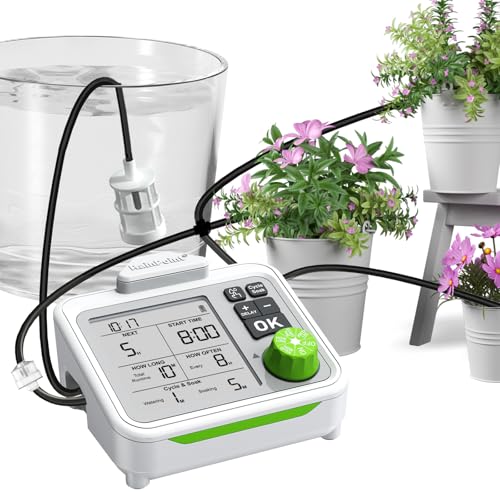
This system highlights a cycle-and-soak setting, a watering approach that breaks up time into shorter cycles with soak periods. It aims to maximize soil saturation while saving water—potentially reducing consumption by up to 30% and boosting plant performance. Easy programming allows flexible frequencies from every 8 hours to once a month, with a wide duration range from 20 seconds to 20 minutes. A manual function and delay option help live adjustments for varying seasons or plant needs.
Moistenland 15-Pot Automatic Watering System

Moistenland’s 2025 upgrade centers on customizable watering schedules fed by timers with an internal clock. The design emphasizes root-zone delivery to minimize waste and overwatering risks. Reported benefits include notable water savings—up to 70% versus traditional methods—and controlled watering to reduce plant stress. The system supports multiple pots with a focus on preventing runoff and ensuring consistent soil moisture across varied plant species, sizes, and pot depths.
RAINPOINT Smart Automatic Watering System
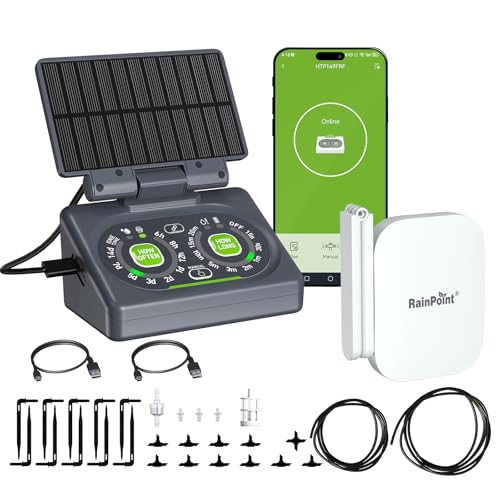
This model blends dual-power options with local control and remote app capabilities. It enables both manual operation and app-based watering through a Wi-Fi hub, compatible with 2.4 GHz networks. The design prioritizes even water distribution across ten to fifteen plants, addressing common issues like uneven pressure and backflow. A built-in anti-backflow valve helps ensure the watering pattern remains stable across longer operating runs, making it a solid option for tech-friendly homes and apartments.
Blumat Classic Self-Watering Stakes (12 Pack)

Blumat Classic Stakes offer a hands-off approach with a siphon-based, ceramic-cone mechanism. These stakes function as a planter insert system, delivering water gradually to the root zone as soil moisture dictates. They are designed for indoor and outdoor use, compatible with a range of potted plants, and are celebrated for their simple, passive operation. The 12-pack (or 9-pack in other listings) provides flexible coverage for multi-plant setups and can be integrated with larger irrigation schemes where a drip line isn’t feasible.
Beday Solar Dual-Power Automatic Drip System

This Beday model emphasizes versatility with dual charging—solar and USB—to keep watering uninterrupted across seasons. It is designed for both indoor and outdoor use, including balconies and garden spaces. The feature set includes scheduling flexibility and a focus on year-round plant care, making it an attractive option for users who want a resilient system that doesn’t rely solely on sunlight. The solar option helps reduce energy costs and supports off-grid setups where a power outlet isn’t readily available.
Buying Guide: Key Purchase Considerations
When selecting an irrigation system for indoor plants, consider the following factors to match your space, plant variety, and lifestyle:
- Plant load and layout: For many plants across multiple pots, systems with at least 10–15 outlets or emitters are ideal. Consider adjusting to your pot spacing and light exposure to ensure even moisture uptake.
- Watering method and speed: Cycle-and-soak methods and slow-release drip options tend to reduce runoff and root rot. If you have delicate varieties, choose a system that provides gentle, gradual watering.
- Power options: Solar plus USB charging offers resilience in light-limited environments. If you’re in a condo or a room without easy access to outlets, dual-power designs are beneficial.
- Moisture sensing and scheduling: Timers, internal clocks, and moisture-sensing features help automate routines while avoiding overwatering. Programs should allow flexible frequencies and durations.
- Ease of setup and maintenance: Look for plug-and-play assemblies, clearly labeled tubing, and reputable customer support. Self-contained stakes provide a low-maintenance option for beginners.
- Water savings and efficiency: Drip systems that deliver water directly to the root zone minimize evaporation and runoff. This is especially important in homes with water-use restrictions or sensitive plant species.
- Expandability and compatibility: If you plan to add more plants later, choose a system with scalable tubing, connectors, and compatible emitters.
How To Choose For Different Scenarios
If you travel frequently, prioritize auto-timers with a robust schedule library and remote control. For a balcony garden with varying light, a solar-powered, dual-source option offers reliability and convenience. For plant collection with diverse watering needs, a cycle-and-soak capable unit can tailor moisture distribution to each pot. Finally, consider passive options like self-watering stakes for low-maintenance setups with minimal wiring or power requirements.
Implementation Tips
Begin with a pilot run on a small group of plants to calibrate watering times and durations. Check soil moisture after the first few cycles to avoid under- or over-watering. Label sections by plant type or pot size to keep track of different moisture needs. Regularly inspect emitters and tubing for clogs or leaks, and adjust schedules seasonally as indoor humidity and temperatures shift.
By selecting one of these irrigation systems, you can safeguard plant health while enjoying more flexibility in daily life. The choices above are designed to accommodate a range of spaces—from compact apartments to home greenhouses—each with distinct watering demands and power preferences.