When selecting a corrugated pipe for a French drain, durability, flexibility, and ease of installation are essential. The following five products represent solid, expandable, and perforated options designed to move groundwater away from foundations, basements, and landscaping features. Each option below emphasizes durability, ease of use, and compatibility with standard 4-inch drainage installations.
Summary
| Product | Diameter | Length | Perforation | Expandability |
|---|---|---|---|---|
| Flex-Drain 51110 | 4 in | 25 ft | Solid | Fixed |
| Flex-Drain 51710 | 3.37 in ID | 12 ft | Solid | Fixed |
| Flex-Drain 51510 | 4 in | 25 ft | Perforated with Sock | Fixed |
| Drain Pipe Perf Flex 4Inx25Ft 51310 | 4 in | 25 ft | Perforated | Expandable |
| Flex-Drain 51910 | 4 in | 12 ft | Perforated | Fixed |
Flex-Drain 51110: Flexible 4-Inch Drain Pipe

The Flex-Drain 51110 unit offers a solid, flexible 4-inch drainage pipe, measuring 25 feet in length. Its expandable design makes it suitable for quick, straightforward French drain installs where a non-perforated, solid conduit is desired to convey water away from structures. Durable construction supports long-term outdoor use, and its approachable installation process reduces labor time for landscaping projects. This model is manufactured in China, aligning with common supply chains for drainage components and maintaining a value-focused option for homeowners and contractors alike.
Flex-Drain 51710: 3.37-Inch ID Solid Drain Pipe

The Flex-Drain 51710 offers a compact 3.37-inch inside diameter solid drainage pipe, designed for applications where a smaller conduit is advantageous or where space constraints exist. With a 12-foot length, this option suits shorter trench runs or connect-to-line sections within larger drainage systems. The product emphasizes value and ease of use, while maintaining durable construction for outdoor use. As with other Flex-Drain offerings, it is manufactured in China, providing a reliable choice for budget-conscious installations.
Flex-Drain 51510: Perforated 4-Inch Drain Pipe

The 51510 model expands the functionality of a typical French drain with perforations and a filter sock, all in a 4-inch, 25-foot package. Perforated pipe increases water collection from surrounding soil while the filter sock reduces sediment intrusion, promoting sustained drainage performance. This unit is marketed as durable and user-friendly, designed for landscapes and foundation drainage applications. It is manufactured in China, aligning with common supply channels for landscape drainage components.
Drain Pipe Perf Flex 4Inx25Ft 51310

The 51310 unit by 212 Main is a perforated, expandable drainage pipe that unfolds from 2 to 25 feet. It is specifically positioned for groundwater drainage in French drain setups and dispersal in flower beds. With an emphasis on exceeding ASTM standards, this option provides a robust choice for projects requiring a combination of flexibility and regulatory compliance in drainage performance. The product’s expansion capability supports quick trench filling and adaptable layouts.
Flex-Drain 51910: Perforated 4-Inch Drain Pipe
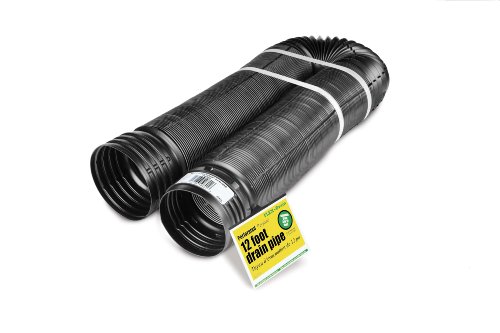
The Flex-Drain 51910 offers a 4-inch perforated pipe in a 12-foot length, designed for French drains and similar groundwater dispersal applications. The perforations enable efficient water collection from surrounding soil, while the 12-foot length provides a practical balance between trench coverage and install ease. Like other Flex-Drain products, it emphasizes durability and simple installation, with manufacturing in China helping to keep this option accessible for many landscape and drainage projects.
Buying Guide
Key considerations when choosing corrugated or perforated pipe for a French drain include material durability, perforation pattern, length, and expansion capabilities. The following points help compare options across the five products listed above.
- Diameter and flow capacity: French drains typically use 4-inch pipes to balance flow rate and trench space. Some models offer slightly smaller inside diameters; verify compatibility with existing fittings and sock/cover systems.
- Perforation vs. solid: Perforated pipes capture groundwater more effectively, especially when paired with a filter sock. Solid pipes are better for directing water in a controlled fashion and avoiding sediment entry when used with appropriate filtration, or in final discharge lines.
- Expandable vs. fixed length: Expandable pipes can adjust to trench lengths or irregular layouts, reducing the need for joints. Fixed-length pipes require precise trench planning but can be simpler in straightforward installations.
- Filter sock and abrasion resistance: Perforated pipes with filter socks help prevent soil intrusion, prolonging the life of the drain by maintaining interior cleanliness and reducing clogging risk.
- Environmental and installation context: For soils with coarse texture or high sediment load, perforated pipes with filtration features are advantageous. In stable soils, solid pipes may suffice for directing water away from foundations or low-lying areas.
- Code and standard compliance: Some pipes explicitly state conformance to ASTM standards. Choosing certified options adds a layer of reliability, especially for long-term exterior applications.
- Durability and manufacturing origin: Many drain pipes are manufactured abroad; consider warranty, local availability, and replacement parts when evaluating long-term performance and maintenance needs.
- Installation ease and compatibility: Look for pipes designed to pair with common fittings, couplers, and sock materials to streamline trench work and reduce installation time.
In selecting a corrugated or perforated drainage pipe for a French drain, balance the need for easy installation, reliable water dispersion, and sediment management. The options above provide a range of capacities—from solid, expandable lines to perforated pipes with filter socks—allowing you to tailor the drainage setup to your landscape or structural drainage requirements. Always plan trench dimensions, verify compatibility with end treatments, and consider local soil conditions to optimize performance.