Finding the right razor rake for lake weeds helps keep shores clear, preserve access to docks, and support enjoyable water activities. This guide highlights top-rated, durable rakes designed to cut through cattail, reed, lily, and algae with minimal effort. Each option is evaluated for blade quality, ease of use, throw rope length, and overall build to help you choose confidently for your lake or pond maintenance needs.
| Product | Brand | Cut Width | Rope | Notable Feature |
|---|---|---|---|---|
| Jenlis The Original Weed Razer | Weed Razer | 48 inches | 25 ft | |
| Jenlis Weed Razer Express | Weed Razer | 30 inches | 25 ft | |
| Jenlis Razer Rake Heavy Duty | Weed Razer | 36 inches | Optional float, 9 ft handle | |
| Lake Weed Cutter UIABOPZ | UIABOPZ | 32 inches | 32 ft | |
| Jenlis Weed Razer Pro | Weed Razer | 30–62 inches | 25 ft |
Jenlis The Original Weed Razer

The Original Weed Razer uses razor-sharp V-shaped blades to remove aquatic vegetation quickly. It cuts a 48-inch-wide path, enabling efficient clearance of submerged weeds, cattail, reed, lily, and algae. Weighing about eight pounds, it is light enough to throw and sink to the bottom to cut weeds at their base. Includes a 5-foot handle and a 25-foot throw rope to extend reach. This model prioritizes speed and broad-area cutting, making shorelines more accessible.
Jenlis Weed Razer Express
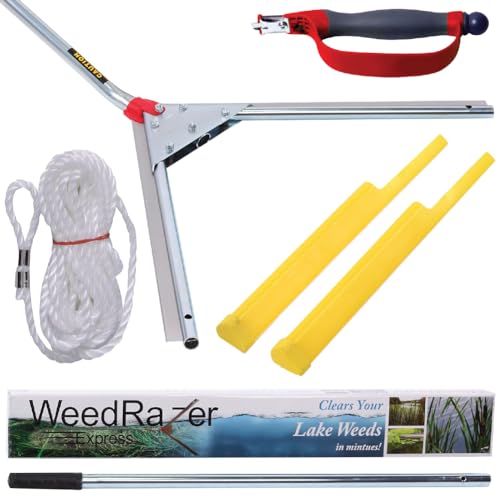
The Weed Razer Express offers a compact design with a 30-inch cut width, designed for quick work along smaller lakes or tighter shoreline areas. Weighing about six pounds, it remains easy to throw while sinking to the bottom to sever weeds at their base. The 5-foot handle complements straightforward operation, and the tool maintains shoreline accessibility for swimming, boating, or fishing.
Jenlis Razer Rake Heavy Duty

This 3-in-1 collapsible rake combines a long 9-foot handle with a 36-inch rake head, allowing broad weed removal and debris collection. It includes an optional float attachment for extending reach into deeper water and razor-sharp teeth built from professional-grade aluminum. The design emphasizes portability and storage, making it suitable for frequent shore maintenance and seasonal cleanup.
Lake Weed Cutter UIABOPZ

The UIABOPZ lake weed cutter features a 32-inch adjustable cut width and a 32-foot throw rope. It uses a stainless steel construction for durability and corrosion resistance. The 3-pound weight makes it easy to cast, sink, and retrieve, allowing contractors or homeowners to harvest weeds at the pond bottom and sever vegetation at the root. It targets dense weed growth with a robust cutting edge and practical rope system.
Jenlis Weed Razer Pro

The Weed Razer Pro expands on the original with an adjustable cut width from 30 to 62 inches and includes a blade sharpener. Weighing around nine pounds, it remains manageable yet capable of cutting large areas. It sails through aquatic vegetation with its V-shaped blades, keeping shoreline access clear for swimming and boating while maintaining quick setup and reliability across seasons.
Buying Guide: Key Purchase Considerations
- Cut width and reach: Wider blades cover more area per pass but may be heavier; consider your lake size and typical weed thickness.
- Blade design and material: V-shaped or razor-sharp teeth on corrosion-resistant metal promote cleaner cuts at the base of weeds.
- Weight and portability: Lighter tools are easier to throw, but heavier models may cut tougher growth more effectively. Look for collapsible or adjustable designs for storage and versatility.
- Rope length and throw distance: A longer throw rope expands your reach along docks and shoreline; ensure it’s sturdy and weather-resistant.
- Durability and corrosion resistance: Stainless steel or aluminum builds resist water exposure and provide longer tool life in freshwater environments.
- Maintenance features: Built-in blade sharpeners or easy disassembly help maintain cutting efficiency over time.
- Storage considerations: Collapsible or foldable rakes save space in garages or sheds and reduce clutter during off-seasons.
- Environmental impact: Choose tools that minimize disturbance to aquatic life and avoid excessive disturbance to the shoreline ecosystem.
- Price-to-value: Compare blade quality, weight, and warranty when evaluating options to balance upfront cost with long-term performance.