Finding pruning shears that reduce strain without sacrificing cutting power is key for gardeners with arthritis or weak hands. The following selections emphasize ergonomic handles, lighter weight, and cutting efficiency to lessen effort and wrist fatigue while delivering clean, precise cuts. Each option includes a quick look at why it can help users who need comfortable, dependable pruning tools for ongoing garden tasks.
| Product | Brand | Key Benefit |
|---|---|---|
| MEPEREZ Ultra Sharp Germany Steel Pruning Shears | MEPEREZ | Low-effort cuts with ergonomic grip and durable build |
| gonicc 8″ Professional Premium Titanium Bypass Pruning Shears | gonicc | Lightweight, titanium blade, non-slip ergonomic handles |
| Haus & Garten ClassicPRO 8.5″ Pruning Shears | Haus & Garten | Senior-friendly design with shock-absorbing features |
| Felco F6 Pruning Shears | FELCO | Forged aluminum, precise bypass blade, replaceable parts |
| Ratchet Pruning Shears for Gardening (GEROSSI) | GEROSSI | 3-step ratchet mechanism for 3x cutting power |
The following sections profile five top picks. Each entry includes a product title with a direct Amazon link, an image, and a concise look at features relevant to arthritic or weak hands. Read on to compare ergonomics, grip, and cutting capacity across options designed for comfort and control.
MEPEREZ Ultra Sharp Germany Steel Pruning Shears

These pruning shears emphasize a strong, durable build with a wear-resistant coating to maintain sharpness over extended use. A sharper blade and ergonomic, flexible handle are designed to reduce the amount of force needed for cutting, making it a practical option for users with weak hands or arthritis. The tool is suitable for pruning small branches and taking on light to moderate garden tasks, supporting efficiency without excessive strain.
gonicc 8″ Professional Premium Titanium Bypass Pruning Shears
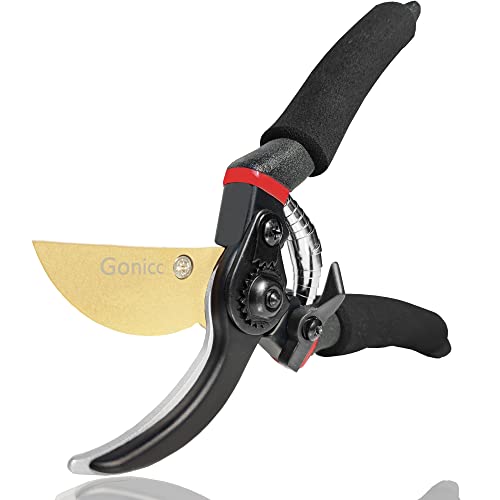
The GPPS-1003 model features a drop-forged body with titanium steel blades and an ergonomic, non-slip handle. The combination provides a lightweight feel with robust cutting ability, supporting comfortable use for extended pruning sessions. The design prioritizes balance and control, helping users maintain steady pressure with less fatigue when trimming small to medium branches.
Haus & Garten ClassicPRO 8.5″ Pruning Shears

ClassicPRO focuses on ergonomic handling and durability. Japanese-grade high-carbon steel blades stay sharp with use, and the handles incorporate ergonomic shaping and non-slip grips to reduce hand fatigue. The design also addresses comfort with shock-absorbing features, which helps minimize wrist strain during pruning sessions and is suitable for seniors and arthritis sufferers.
Felco F6 Pruning Shears

The F6 model blends durability and precision with forged aluminum handles and a replaceable parts system. Its rotating handle and cushioned-shock absorber enhance comfort, while the bypass blade provides clean cuts through moderate branches. This tool is well-suited for gardeners who want a long-lasting pruner with parts that can be maintained over time.
Ratchet Pruning Shears for Gardening (GEROSSI)

This GEROSSI model adds a 3-step ratchet mechanism to multiply hand power, making it easier to cut thicker stems. The two-in-one design includes a traditional single-cut mode and an enhanced ratchet mode, which is particularly helpful for users with arthritis or weak grip. The blade is crafted from high-carbon SK-5 steel with a corrosion-resistant coating for durability and precise pruning.
Buying Guide: How to Choose Pruners for Arthritic Hands
- Grips and ergonomics: Look for contoured, non-slip handles with soft padding and ample finger space. A rotating or cushioned handle reduces strain and supports a natural wrist position.
- Cutting mechanism: Bypass pruners offer clean cuts on live stems, while anvil pruners are simpler and sturdy for dry wood. For arthritic hands, ratchet-assisted models can dramatically decrease required force.
- Weight balance: Lighter tools with well-distributed weight reduce fatigue during longer pruning sessions. Try to find a model that feels balanced in your grip.
- Blade material and maintenance: Titanium or high-carbon blades stay sharp longer and resist wear. Choose tools with replaceable blades or parts to extend service life.
- Size and capacity: Ensure the tool can handle the typical branch thickness you prune (1 inch is common for many garden tasks). A comfortable fit matters more than maximum capacity for arthritis users.
- Durability and warranty: Look for forged bodies, corrosion resistance, and a dependable warranty. This supports continued use without frequent replacements.
- Maintenance: Regular sharpening and proper lubrication help maintain performance, especially for those who rely on lower-force cuts.
When selecting pruners for arthritic hands, prioritize tools that reduce required force, offer stable grips, and maintain cutting performance with minimal strain. The options above span budget-friendly to premium, all aimed at improving comfort without compromising pruning results.