Guarding garden crops from frost, snow, and cold snaps is essential for a healthy, productive season. Frost blankets and floating row covers create a microclimate that traps heat, improves germination, and shields delicate plants from harsh conditions. Below are five top-rated options to help American gardeners extend the growing season, protect fruit trees, and safeguard vegetables, herbs, and ornamentals during winter and transitional weather.
Summary at a glance:
| Product | Brand | Size | Material | Key Benefit |
|---|---|---|---|---|
| Garutom Plant Covers | Garutom | 10 ft x 33 ft | 1.1 oz/yd² non-woven polypropylene | Weatherproof protection with light transmission |
| MAQIHAN Plant Cover | MAQIHAN | 6.5 ft x 13 ft | 1.0 oz/yd² non-woven fabric | Triple-duty frost, snow, and sun protection |
| MIXC Plant Covers | MIXC | 47.2” x 70.8” | 1.77 oz/yd² non-woven fabric | Heavyweight, adjustable drawstring |
| AlpineReach Frost Cover | AlpineReach | 10 x 50 ft | 1.2 oz/yd² breathable fabric | All-season protection with heat retention |
| SnugNiture Plant Covers | SnugNiture | 10 ft x 33 ft | 1.1 oz/yd² non-woven polypropylene | Durable, reusable protection |
Garutom Frost Plant Covers

The Garutom frost plant covers come in multiple sizes, with the 10 ft x 33 ft option being well suited for larger beds and fruit trees. Made from breathable, lightweight 1.1 oz/yd² non-woven polypropylene, the fabric transmits about 85% of available light while trapping heat to shield against frost, rain, snow, wind, and low temperatures. The material’s durability supports repeated seasonal use and it’s easy to cut to fit irregular shapes. It doubles as a shade cloth and insect barrier in warmer months, providing year-round utility for home gardens, raised beds, and greenhouse perimeters.
How this option stacks up
- Pros: Large, adaptable size; good light transmission; durable and UV-stable; versatile for year-round protection.
- Cons: Requires cutting for precise fit on oddly shaped plants; may need hoops or frames for taller crops.
- Best use: Frost protection for fruit trees, veggie beds, shrubs, and potted plants in outdoor spaces.
MAQIHAN Plant Cover

MAQIHAN offers a 6.5 ft x 13 ft frost protection blanket using 1.0 oz/yd² non-woven fabric. The cover provides frost and snow protection while allowing sunlight to reach plants, supporting ongoing growth. Its three-way usability—protecting against frost, animals, and insects—plus compatibility with hoops or frames for a tailored fit makes it a flexible option for varied garden layouts. The lightweight fabric makes handling easy, and it can be trimmed to fit individual plants or rows.
How this option stacks up
- Pros: Versatile frost, snow, and pest protection; breathable fabric supports plant health; adjustable fit with simple trimming.
- Cons: Non-woven fabric may tear under rough handling; some setups may require hoops for vertical coverage.
- Best use: Mixed vegetable plots, fruit trees, and ornamental plants requiring seasonal protection.
MIXC Plant Covers

This two-pack from MIXC features large, heavy-weight 1.77 oz/yd² non-woven fabric, measuring 47.2 inches by 70.8 inches per cover. The fabric allows 40%–60% light transmittance, providing frost protection of roughly 3°–8°F for a typical garden. The drawstring at the opening enables quick, secure closure around plants, while the breathable material permits air and moisture to reach the roots. These covers can be trimmed for precise fit and used with hoops or frames to maintain the desired shape.
How this option stacks up
- Pros: Heavyweight construction; adjustable sizing; straightforward installation with drawstrings.
- Cons: Slightly bulkier to store; the open drawstring may require securing in windy areas.
- Best use: Cold-season protection for shrubs, small trees, and potted fruit plants.
AlpineReach Frost & Sun Protection

AlpineReach’s frost blanket is designed for all-season use, offering a breathable 1.2 oz/yd² fabric that protects plants from frost, snow, and cold winds while allowing essential light and moisture to pass through. The blanket helps create a microclimate that promotes healthier growth and extends the growing season. It’s suitable for a range of crops, including seedlings, annuals, and perennials, and can be used to cover rows, raised beds, or individual plants. Its lightweight yet sturdy construction supports repeated seasonal deployments without sacrificing airflow or light transmission.
How this option stacks up
- Pros: All-season protection; promotes warmer microclimate; breathable fabric.
- Cons: May require staking or hoops for larger rows to maintain shape during wind.
- Best use: Delicate transplants, fruiting plants, and vegetables requiring extended protection.
SnugNiture Plant Covers
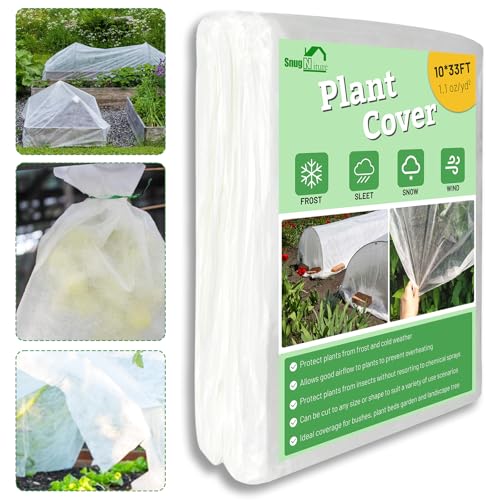
SnugNiture offers a 10 ft x 33 ft option using 1.1 oz/yd² non-woven polypropylene. The covers are designed for durability and reuse, with a material that balances insulation with air permeability. This makes them effective at preventing frost damage while still allowing sunlight and rain to reach soil and plant roots. The product emphasizes sturdy construction and long-term use, suitable for a variety of garden layouts from rows to shrubs and container plantings.
How this option stacks up
- Pros: Durable, reusable design; good light transmission; versatile for different garden setups.
- Cons: Large size may require additional hoops or supports to keep shape in strong winds.
- Best use: Winter protection for vegetables, berries, and ornamentals in open garden beds.
Buying Guide: Key Considerations For Choosing Frost Blankets
- Size and fit: Measure your beds or plant clusters to select a blanket that covers without excess weight. Look for adjustable or cuttable fabrics to tailor the cover to irregular shapes and plant heights.
- Material and weight: Heavier fabrics (around 1.77 oz/yd²) tend to offer stronger frost protection but may be less breathable. Lighter options (1.0–1.2 oz/yd²) improve airflow and light transmission but provide less insulation.
- Light transmission: Plants need photosynthesis to continue growing. Choose fabrics that transmit a substantial portion of light (typically 40–85%) to maintain healthy seedlings and fruiting plants, even under cover.
- Breathability and moisture management: A good frost blanket should allow air and moisture to reach roots and soil, reducing condensation and fungal risk. Look for non-woven polypropylene or similar breathable materials.
- Durability and reuse: Consider UV stability and tear resistance if you plan to reuse covers for multiple seasons. Reusability lowers long-term costs and environmental impact.
- Protection scope: Some blankets protect against frost only, while others shield from wind, hail, insects, and birds. If you need all-season versatility, look for multi-protection designs labeled for frost and sun exposure.
- Compatibility with garden structures: If you use hoops, frames, or low tunnels, ensure the cover can be secured without tearing. Drawstrings or edge hems often facilitate quick deployment.
- Storage and care: Choose designs that fold flat for storage and resist creasing. Clean, dry blankets extend their usable life and prevent mold.
- Cost-to-value: While pricier options may feature thicker fabric and additional protections, evaluate based on your climate, garden size, and seasonal needs to determine overall value.
When selecting a frost blanket, align the product’s specifications with your local climate, garden layout, and crop mix. For larger plots or fruiting trees, a big, durable cover with good light transmission is advantageous. For seedling trays and small beds, a lighter, more flexible option with easy trimming and storage may be preferable. By understanding fabric weight, permeability, and maintenance needs, gardeners can pick the option that best preserves plant health through cold spells and transitional seasons.