Legigo 2 Qt Horticultural Charcoal
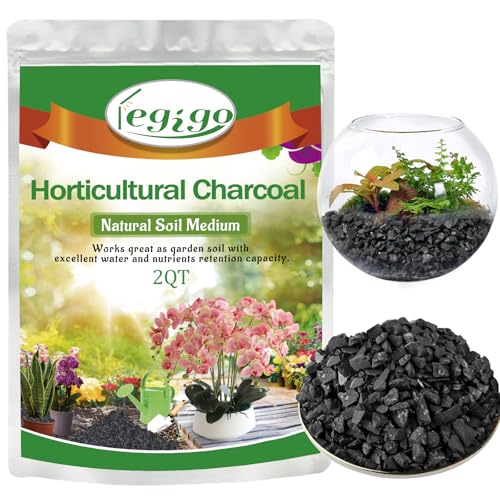
Activated or horticultural charcoal is a lightweight soil amendment that improves drainage and aeration, especially in terrariums, orchid mixes, bonsai soil, and houseplant substrates. The Legigo 2 Qt option is a natural hardwood charcoal designed to prevent soil compaction and support healthy root systems. The product is sieved to a 3-7 mm size, striking a balance between moisture drainage and nutrient retention. Its porous structure can help regulate soil temperature and promote seed germination by increasing warmth at the root zone. For terrariums, where moisture control and airflow are essential, this charcoal provides a reliable substrate component that helps maintain a light, non-dense potting mix.
Key features include drainage enhancement, suitable particle sizing for easy mixing, and a focus on promoting root health. It is marketed toward indoor plants, orchids, succulents, and terrarium environments, making it a versatile choice for mixed plant setups. Users seeking a straightforward soil amendment with natural hardwood origins will find this option aligns with common terrarium and potting mix goals. When integrating, consider combining with perlite to optimize aeration further and avoid over-aggregation in tightly sealed containers.
Legigo 4QT All Natural Horticultural Charcoal

This larger 4-quart pack extends the same principles of charcoal as a soil amendment but in a bigger volume, making it suitable for larger terrarium builds, Bonsai soil mixes, or arrangements with multiple pots. The product highlights include a natural hardwood charcoal profile, an even 3-7 mm particle size, and a focus on preventing soil compaction while promoting air circulation around roots. The material’s heat-absorbing properties can help regulate microclimate within a terrarium, contributing to healthier root systems and improved drainage in moisture-prone environments.
Designed to be mixed easily into the soil, this option emphasizes lightweight, breathable potting substrates. Its use is not limited to terrariums; it can also complement indoor plant soil blends for succulents, orchids, and other moisture-sensitive species. When deploying, consider layering the substrate to avoid over-drying sensitive plants and balance with moisture-retentive components like coco coir or peat substitutes where appropriate.
Sukh Horticultural Charcoal For Plants

Sukh offers a 1-quart option focused on moisture management, drainage, and air flow within plant substrates. The listed features emphasize temperature regulation through charcoal’s heat-absorbing properties, water and nutrient storage capabilities, and improved soil permeability. This makes it particularly suitable for terrariums and potted plants where the root zone needs both air access and consistent moisture balance. The charcoal’s porous structure helps prevent compacted soils, which can impede root growth and gas exchange in enclosed environments.
For terrarium enthusiasts, Sukh’s product can complement sponge-like substrates or mesh-screened layers to maintain a light, breathable base. It pairs well with medium to small particle mixes and can be used alongside perlite or pumice for enhanced drainage. As with all charcoal amendments, it’s important to monitor moisture levels and avoid over-drying or oversaturation, especially in tightly closed terrariums where air exchange is limited.
DANGKELILI Horticultural Charcoal
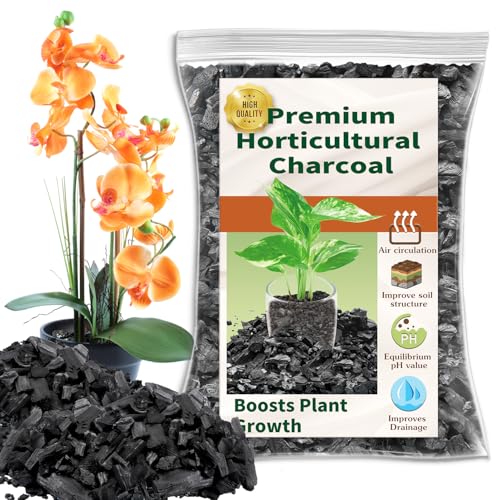
The DANGKELILI 1-Quart premium activated charcoal focuses on porosity and nutrient retention, with particle sizes described as 6-12 mm and a mix of small to medium-sized fragments. It’s specifically suited for soil amendments in containers without drainage holes, where moisture balance is critical for plant health. The bamboo-based raw material is renewable, and the product highlights emphasize strong moisture control, aeration, and a gradual nutrient release profile that helps plants access nutrients when they need them.
In terrarium or orchid mixes, this charcoal can serve as a foundation layer to improve drainage and prevent compaction, followed by a lighter substrate above. Its larger particle size supports better airflow around roots, reducing the risk of anaerobic pockets. When using, it’s recommended to blend with other soil components to optimize structure and ensure a stable moisture regime for a variety of terrarium inhabitants.
Olivette Horticultural Biochar 3 Bags

Olivette’s activated charcoal is a versatile, olive-derived biochar intended for moisture control and soil enrichment. This set emphasizes sustainability by utilizing recycled olive pits, pulp, and prunings, aligning with eco-conscious terrarium practices. The charcoal supports moisture balance—absorbing excess water while retaining essential nutrients—benefiting terrarium trees, tropical plants, and moisture-sensitive species. It also enhances soil aeration and reduces density, creating space for beneficial soil microorganisms to thrive.
For terrarium projects, this biochar can be used as a foundational amendment mixed into the substrate or layered within the substrate profile to optimize moisture retention and root health. It pairs well with sphagnum moss, charcoal layers, and perforated drainage layers. As with all biochar products, gradual integration and monitoring of humidity levels are key to achieving steady plant performance in enclosed ecosystems.
Harris Horticultural Charcoal
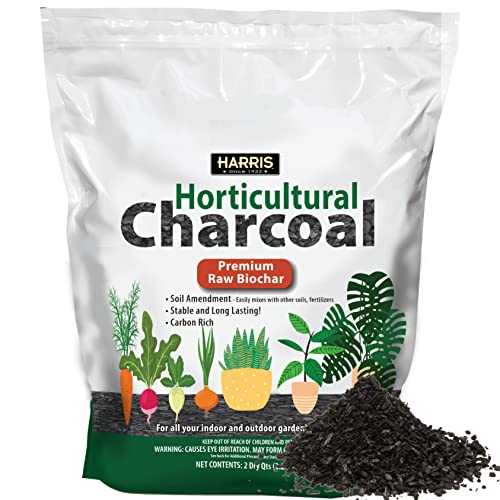
HARRIS Horticultural Charcoal is presented as a premium biochar soil amendment designed to support plant health in terrariums and soil-based systems. The product emphasizes increasing soil carbon, nutrient content, water retention, and the activity of beneficial microbes. The suggested usage is a simple 1 part biochar to 9 parts potting soil mix, making it accessible for both novice and experienced terrarium builders who want a straightforward approach to improving soil structure and microbial activity.
In terrarium and indoor gardening scenarios, this option provides a reliable way to boost drainage and aeration while maintaining moisture, reducing the risk of root rot in humid environments. When integrating, consider calibrating with your plant roster and container size, as larger setups may benefit from incremental additions to avoid sudden shifts in moisture balance.
Buying Guide: Key Considerations For Choosing Activated Charcoal For Terrariums
- Material source and sustainability: Look for charcoal derived from hardwoods or recycled plant materials, and note any eco-friendly claims such as olive-pit based biochar. This matters for long-term terrarium health and environmental impact.
- Particle size and texture: For terrariums, a balance between small-to-medium particles (roughly 3-7 mm to 6-12 mm) helps achieve good drainage without creating compaction. Larger sizes improve aeration but may not mix as well with fine substrates.
- Moisture management: Activated charcoal absorbs excess moisture, which benefits moisture-sensitive plants. However, overuse can lead to overly dry substrates. Start with smaller amounts and monitor humidity and plant response.
- Nutrient retention and release: Charcoal can store nutrients and release them gradually. This supports steady growth but may require regular feeding adjustments based on plant type and container environment.
- Aeration and soil structure: The porous network of charcoal improves gas exchange in the root zone, reducing the risk of root rot in terrariums and moisture-heavy setups.
- Compatibility with substrates: Charcoal works well with perlite, pumice, sphagnum moss, coco coir, and orchid mixes. Consider layering or mixing strategies that suit your terrarium’s plants and microclimate.
- Application rate: For terrariums, a common approach is to add a thin layer or blend a portion into the topsoil. Avoid placing charcoal in direct contact with plant crowns or seeds if you’re unsure about moisture management.
- Safety and quality: Prefer food-grade or horticultural charcoal that’s intended for soil amendment to minimize contaminants and maximize plant compatibility.
Summary Of Featured Products
| Product | Brand | Volume / Size | Why It Fits Terrariums | Amazon Link |
|---|---|---|---|---|
| Legigo 2 Qt Horticultural Charcoal | Legigo | 2 qt | Visit | |
| Legigo 4QT All Natural Horticultural Charcoal | Legigo | 4 qt | Visit | |
| Sukh Horticultural Charcoal For Plants | Sukh | 1 qt | Visit | |
| Olivette Horticultural Biochar 3 Bags | Olivette | 3 bags (assorted) | Visit | |
| Harris Horticultural Charcoal | HARRIS | 2 qt | Visit |
Note On Usage And Best Practices
Activated charcoal should be treated as a soil conditioner rather than a stand-alone growing medium. For terrariums, layering is effective: start with a drainage layer, add a medium-weight substrate mixed with charcoal, and finish with a top dressing or moss layer to maintain humidity where needed. When integrating multiple products, ensure the overall substrate remains breathable. Regularly inspect terrarium lids for condensation buildup and adjust watering schedules to reflect any changes in substrate moisture retention. Always follow product-specific guidelines for recommended usage rates and mixing ratios to protect delicate plant root systems.
Additional Information On Product Variants
Several options emphasize the sustainability and reusability of the materials, such as olive-derived biochar and hardwood charcoal. If your terrarium includes moisture-sensitive species like tropical orchids or carnivorous plants, a charcoal blend with strong drainage and porous structure can help maintain stable root environments without fostering stagnant water. For larger builds or collections, volumetric options like the Legigo 4QT provide cost-effective long-term supply, while smaller packages offer flexibility for experimenting with substrate blends. Consumers should consider the plant mix and container size when choosing particle size and overall charcoal quantity.
Overall, activated charcoal for terrariums serves multiple functions: improving drainage, enhancing aeration, stabilizing humidity, and supporting beneficial microorganisms. By selecting a suitable product from the options above and adjusting usage to your specific terrarium setup, you can create a healthier substrate that promotes robust plant growth and resilience in enclosed environments.