A well-chosen pond filtration system is essential for clear water, healthy fish, and low maintenance. This guide reviews five top-rated pressurized and UV-enabled pond filters that suit a range of pond sizes and fish loads. Each option combines mechanical and biological filtration with options like UV-C sterilization to reduce algae and improve water quality. Read on to compare features, maintenance benefits, and suitability for koi, ornamental ponds, and mixed-fish environments.
| Product | Capacity (gallons) | Key Benefit |
|---|---|---|
| VIVOHOME Pressurized Biological Pond Filter | Up to 1600 ornamental / 800 fish | Two-stage filtration with 13W lamp |
| VEVOR Bio Pressure Pond Filter | Up to 1600 ornamental / 800 fish | Three-level UV-C lamp with adjustable timing |
| Anbull Bio Pressure Pond Filter | Up to 1060 GPH flow | Crank-cleaning, built-in UV-C lamp |
| VEVOR Pressurized Biological Pond Filter | Up to 2000 gallons decorative / 1000 fish | Four sponge densities, 13W UV-C |
| OASE BioSmart 5000 Pond Filter | Up to 5000 gallons (no fish) | Advanced flow-through design, high biofiltration |
Choosing the right filter involves pond size, fish load, water source, and maintenance preferences. The following sections spotlight each product’s strengths and how they fit typical American pond setups, from small backyard koi ponds to larger ornamental installations.
VIVOHOME Pressurized Biological Pond Filter
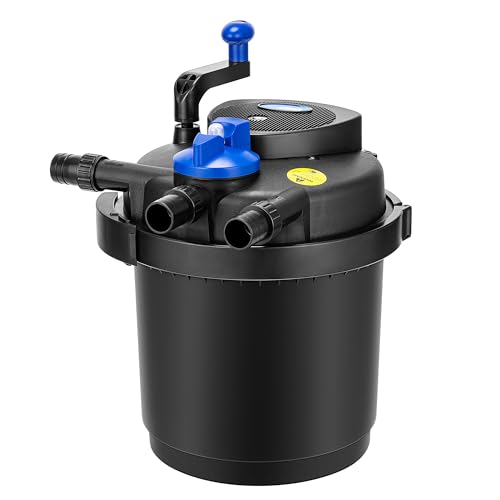
The VIVOHOME model uses a pressurized design to deliver strong bio-mechanical filtration for koi and ornamental ponds. It supports up to 1600 gallons for ornamental ponds or 800 gallons for fish ponds, with a maximum flow of 1580 GPH to keep water crystal clear. Its filtration system includes two blue 20 PPI sponges and two yellow 25 PPI sponges, plus a built-in 13W clarifying lamp for cleaner water. Maintenance is straightforward: switch between Filter and Clean modes, backflush until water runs clear, and use the red float indicator as a cleaning reminder. A modular body and detachable lid speed routine service.
Best for homes with koi or mixed-fish setups where consistent water clarity matters. The integrated lamp helps mitigate green water, while the pressurized design reduces the risk of backflow and makes multi-tank installations simpler. A potential drawback is that larger koi environments may demand higher flow or a larger ultimate filtration capacity beyond 1600 gallons, depending on feed rate and algae risk.
VEVOR Bio Pressure Pond Filter

The VEVOR filter offers robust filtration with a 1580 GPH flow rate and a 13W UV-C lamp featuring three timing settings for lamp longevity. It is designed for decorative ponds up to 1600 gallons and fish ponds up to 800 gallons. The unit uses four filter sponges of varying densities, enabling efficient removal of suspended particles, sediments, and organic matter. Backwashing is straightforward with a top switch, making maintenance easier and less messy. The three UV-C settings help balance water clarity with energy use.
Ideal for users who want a compact, feature-rich filter with adjustable UV exposure. The ability to tailor lamp operation helps in regions with variable sunlight or extended algae seasons. As with any UV-C-equipped system, regular lamp replacement is necessary to maintain effectiveness, which should be factored into long-term maintenance planning.
Anbull Bio Pressure Pond Filter

The Anbull filter provides up to 1060 GPH flow with four built-in filter sponges for solid and dissolved waste reduction. An 11W UV-C lamp helps improve water quality and combat pollutants. The unit is designed for easy replacement of filter sponges and the light bulb, with a crank-top handle for quick internal cleaning. A color-turbidity indicator signals when cleaning is needed, promoting proactive maintenance. Its compact design makes it suitable for small to medium ponds with moderate fish loads.
Suitable for ornamental ponds under 1060 gallons or fish ponds under 528 gallons when combined with an appropriate pump. The crank-clean mechanism is a nod to hands-on hobbyists who prefer visible, quick filtration actions. For larger koi habitats or high fish density, this model may require pairing with a more powerful pump or a larger-capacity filter.
POPOSOAP Pond Filter With Pump Fountain Kit

The POPOSOAP kit combines filtration with a built-in 660 GPH pump and a fountain kit, providing both water cleaning and aeration features. It includes a three-nozzle fountain display to enhance visual appeal while adding oxygen to pond water. The filter is suitable for ponds of up to around 1180 gallons in size, with three adjustable flow features and an option for a secondary water feature via additional inlets. It is a practical, all-in-one option for smaller decorative ponds that also want a fountain display.
For smaller backyard ponds that require a simple, integrated solution, this kit can be attractive. Potential limitations include a 660 GPH pump that may not keep up with higher fish loads or larger ponds, and the integrated design may limit future upgrades without replacing the entire kit.
VEVOR Pressurized Biological Pond Filter

This VEVOR model reaches up to 1840 GPH, supporting decorative ponds up to 2000 gallons or fish ponds up to 1000 gallons. It features a three-level adjustable UV-C lamp with a three-timing setting, and four filter sponge densities for thorough mechanical and biological filtration. Quick backwash and a top-switch design make cleaning efficient. The three UV settings help balance energy use and disinfection, ideal for ponds with higher algae risk or sunny environments.
Best suited for medium-to-large ponds with moderate to heavy fish loads where UV-C control and strong flow are priorities. Depending on pond layout and flow, you may need to pair with a larger pump to maximize cleaning efficiency. Regular UV-C lamp maintenance remains essential for optimal performance.
OASE BioSmart 5000 Pond Filter
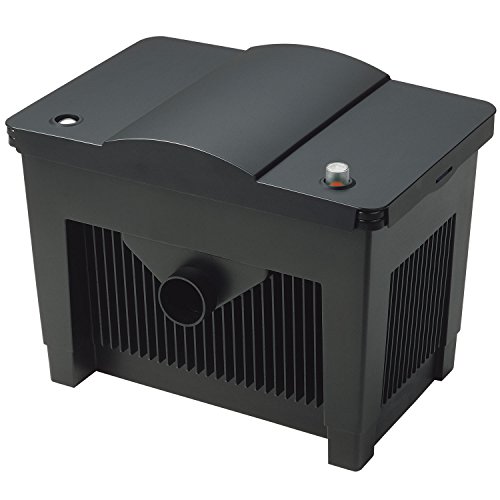
The OASE BioSmart 5000 uses an innovative flow-through design that combines biological and mechanical filtration to maximize oxygenation. It is suitable for ponds up to 5,000 gallons when there are no fish, making it a strong option for large ornamental ponds or water features with low bioload. The filter media includes high-surface-area foams to support robust beneficial bacteria, aiding long-term water quality and fewer maintenance events. It excels in producing clear water with steady oxygenation, particularly in larger, still-water environments.
For sizable ponds without fish, the BioSmart 5000 offers a clear water advantage and high filtration capacity. If your pond contains fish or experiences heavy waste, you may need a system with higher bioload tolerance or a separate settlement pump arrangement. The lack of fish in some designs reduces nutrient input, but consistent maintenance remains essential to prevent buildup over time.
Buying Guide: Key Purchase Considerations
- Pond size and fish load: Larger ponds or higher fish densities require greater flow (GPH) and filtration capacity. Choose filters rated for at least 1.5–2 times your pond’s gallons per hour in peak feeding seasons.
- Filtration type: Pressurized filters enable easy backwashing and suitability for multi-tank setups, while gravity-fed or external filters can offer higher biofiltration capacity for larger systems.
- UV-C integration: UV-C helps control algae and maintain clarity. Consider lamps with adjustable timing settings to balance energy use and disinfection level. Replace lamps per manufacturer guidance.
- Maintenance and accessibility: Look for models with easy sponge replacement, clear turbidity indicators, and simple backwashing mechanisms. Modular designs speed maintenance.
- Energy use: UV-C lamps and high GPH pumps consume electricity. Compare running costs and select models with energy-efficient features when possible.
- Compatibility with pumps: Ensure the filtration unit matches or can be paired with your existing pump’s flow rate and head height for optimal performance.
- Aquatic life considerations: Ponds with koi or goldfish produce more waste; prioritize filters with robust mechanical plus biological filtration and consider aeration features to maintain dissolved oxygen.
- Upgrades and future needs: If you plan to expand your pond, select a filter with higher capacity and flexible configuration to avoid frequent replacements.
Each option presented supports clear water and reliable filtration under typical American backyard conditions. For best results, align your selection with pond volume, fish density, and maintenance preferences, ensuring accessories like UV-C lamps or replacement sponges are readily available from the brand’s ecosystem.