Winter brings ice and snow that can make gravel driveways slippery and uneven. The right ice melt balances fast action with surface safety, especially when pets and landscaping are nearby. The following five products represent a mix of high-heat performance, pet-friendly formulas, and concrete or surface-safe options suitable for gravel driveways in American winters. This guide highlights what to consider and how each product stacks up in real-world use.
| Product | Brand | Key Benefit | Temperature Range |
|---|---|---|---|
| Seasonal Snow & Ice Melter, 50 Lb | Snow Joe | Blue Heat pellets for fast melting | -25°F |
| Kind Melt Pet Friendly Ice and Snow Melter | HARRIS | 100% magnesium chloride, pet-safe | Down to -13°F |
| Safe Paw Pet Safe Ice Melt | Safe Paw | Non-toxic, non-corrosive, concrete-safe | Down to -2°F |
| Maple99 Ice Melt Safer for Concrete -20 lb | Maple99 | Less corrosive to concrete, easy application | Down to -15°F |
| AquaDoc Ice Melt Safe for Concrete – 10 lb | MAV AquaDoc | Calcium chloride formula for extreme cold | Down to -25°F |
The list below selects five products most relevant to gravel driveways, balancing melt speed, surface safety, and pet-friendly design.
Snow Joe Seasonal Snow & Ice Melter – 50 Lb Bag

Snow Joe’s Blue Heat pellets deliver rapid ice and snow melt for driveways, sidewalks, and steps. The heat-generating formula helps distribute melting action evenly, which is beneficial on rough gravel surfaces where uniform coverage reduces slick patches. The product is designed to work in temperatures as low as -25°F, enabling dependable performance during deep freezes. A pet-friendly profile makes it appealing for households with dogs, reducing concern about paw exposure compared with harsher chemical blends.
Harris Kind Melt Pet Friendly Ice and Snow Melter – 15lb
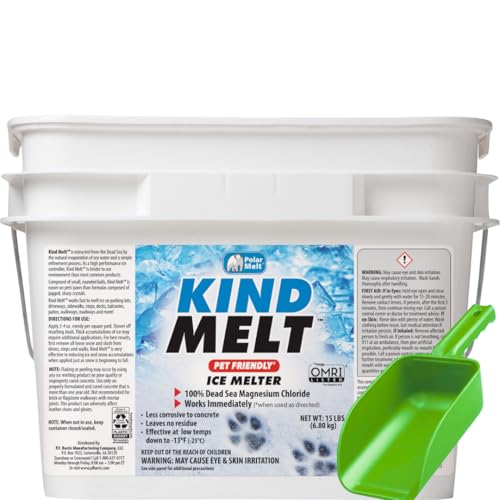
Harris offers a 100% magnesium chloride formula in round pellets designed for pet safety. This product melts ice quickly across driveways, sidewalks, steps, balconies, and walkways, including gravel paths where sharp crystal edges can be a concern. Effective down to -13°F, it provides reliable performance in many winter climates while prioritizing paws and skin safety for animals and children.
Safe Paw Pet Safe Ice Melt – Non-Toxic, Concrete-Safe
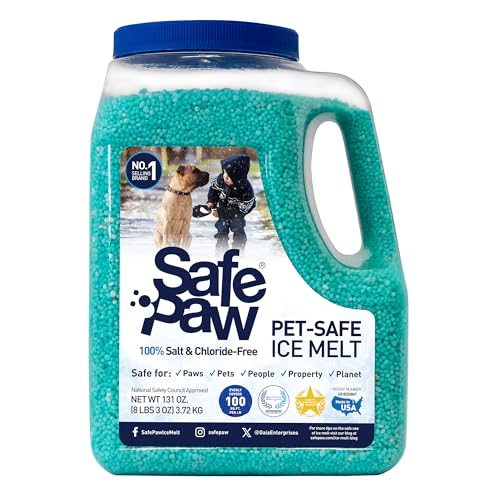
Safe Paw emphasizes pet and family safety with a salt-free, chloride-free formula that remains non-corrosive to concrete and other surfaces. It is designed to be safe for use around homes, schools, and veterinary clinics. While its low-temperature effectiveness reaches around -2°F, its non-toxic profile and concrete safety make it well-suited for gravel driveways where chemical exposure to delicate landscaping or pets is a concern, especially when used as directed and on appropriate surfaces.
Maple99 Ice Melt Safer for Concrete – 20 lb
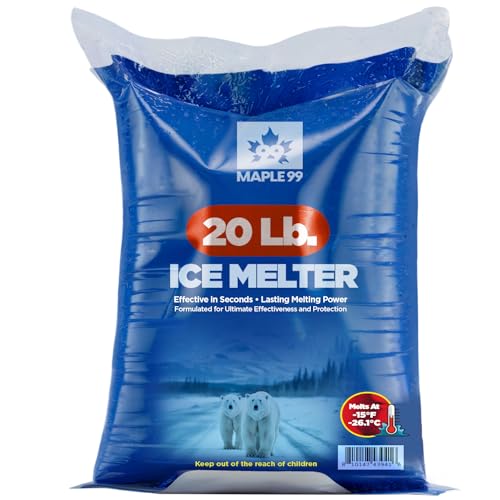
Maple99 presents a less corrosive option for concrete-compatible ice melt with a 20-pound bag. It aims for responsible winter safety management on outdoor surfaces, including driveways, sidewalks, and steps. It melts effectively in subzero temperatures down to -15°F, making it a practical choice for gravel driveways that require reliable performance without aggressive chemistry. The product can be applied ahead of snowfall to help prevent ice buildup and ease later shoveling efforts.
AquaDoc Ice Melt Safe for Concrete – 10 lb
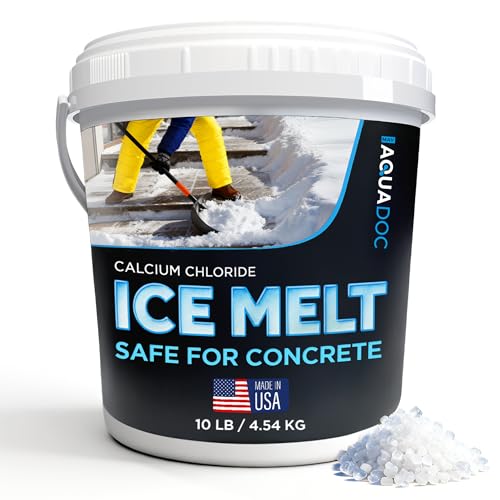
AquaDoc’s 10-pound bag focuses on powerful ice and snow melt with calcium chloride. It performs in extreme cold, down to -25°F, making it suitable for harsh winter conditions. The formula is designed to be safer for concrete, asphalt, brick, and stone surfaces when used as directed, offering a practical option for gravel driveways that may have adjacent concrete borders or edging that require careful treatment to prevent surface damage.
Buying Guide: Key Purchase Considerations
Choosing the right ice melt for a gravel driveway involves balancing melt speed, surface safety, pets, weather range, and environmental impact. Consider the following factors to select a product that fits your needs:
- Temperature Range: Identify your coldest expected conditions. Products that work at -25°F deliver more reliable performance in severe winters, but may cost more or be stronger chemically. For pet owners or surfaces near landscaping, consider pet-friendly and non-corrosive formulas.
- Surface Safety: Gravel drives can be rough on crystals. Look for non-staining or low-residue formulas that minimize damage to gravel and adjacent concrete borders while avoiding staining or patchy coverage.
- Pet and Plant Safety: If pets frequently roam near the driveway, prioritize pet-safe or non-toxic compositions. Check for claims like “pet-friendly,” “non-toxic,” and “non-irritating” and follow application guidelines to prevent exposure.
- Application Area: Large driveways may require bag quantities that reduce the number of applications. Some products are better suited for pre-winter treatment, helping prevent ice buildup, while others melt after ice has formed.
- Environmental Impact: Consider formulas with reduced corrosivity or more sustainable ingredients to minimize any potential impact on nearby soil, grass, and plants.
- Ease of Use: Pellets and pellets-based blends often provide easier spreading on gravel surfaces than powders. A visible color or tint can help track application areas and prevent waste.
- Surface Compatibility: If you have nearby concrete edging or sidewalks, choose formulas labeled safe for concrete or non-corrosive to prevent damage to those surfaces as melt proceeds.
Practical usage tips for gravel driveways include applying the melt ahead of heavy snowfall to reduce snow adhesion to rocks, spreading evenly to minimize slick patches, and reapplying as needed after fresh snowfall or temperature fluctuations. Always read the label for surface safety and environmental guidance, and test a small area before broad deployment.