Choosing the right tubing is essential for a reliable drip irrigation system. The best options combine durability, chemical resistance, and ease of installation, whether you’re laying out a garden bed, balcony planters, or a larger landscape. This guide highlights five top tubing products, their key strengths, and practical considerations to help you pick the right main lines and emitter connections for steady, even watering across varied landscapes.
| Product | Brand | Length | Notes |
|---|---|---|---|
| MIXC 1/4 Inch Blank Distribution Tubing Drip Irrigation Hose | MIXC | 50 ft | Flexible main line; weather-tolerant; good for branching |
| (100′ Roll) 1/4-Inch Dripline with Emitter Spacing | One Stop Outdoor | 100 ft | 6-inch emitter spacing; 1/2 GPH per emitter |
| Rain Bird T22-250S 1/4″ Blank Distribution Tubing | Rain Bird | 250 ft | Textured finish; flexible and easy to stake |
| Raindrip 052020P 1/2-Inch Tubing | Raindrip | Various (main line) | Versatile main or feeder line; suitable for emitters |
| Hourleey 50 Feet Blank Distribution Tubing | Hourleey | 50 ft | High flexibility; compatible with standard fittings |
MIXC 1/4 Inch Blank Distribution Tubing Drip Irrigation Hose
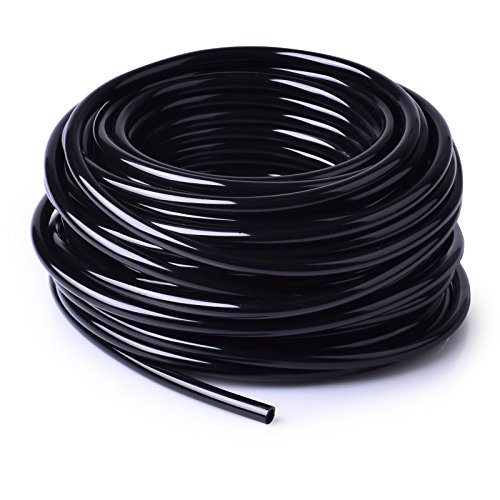
The MIXC 1/4 inch blank distribution tubing is designed for year-round use, capable of being buried or left on the surface in various weather conditions. Its flexible construction helps installers make tight turns with fewer elbows, which simplifies routing through garden beds, ground cover, and landscaped areas. This tubing is suitable as a main line in a small drip irrigation system or as a branch from a larger 1/2″ line to feed micro-watering devices. The combination of durability and flexibility makes it a practical choice for American home gardens and small landscapes.
(100′ Roll) 1/4-Inch Dripline With Emitter Spacing
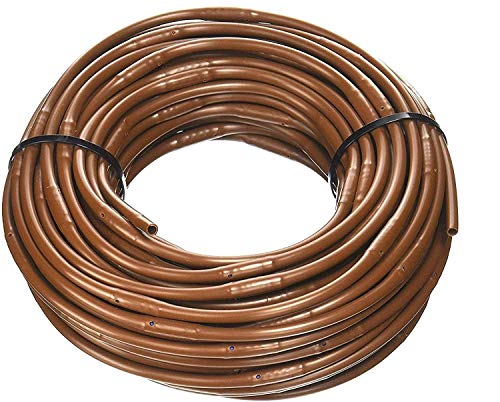
This USA-made 100-foot dripline features 6-inch emitter spacing with a 1/2 GPH flow per emitter, making it ideal for uniform moisture distribution across rows of plants. It’s designed to connect easily with 1/4″ barbed fittings and compatible with most 1/4″ fittings, simplifying the setup of small- to medium-sized drip systems. The tubing is resistant to common landscaping chemicals and fertilizers, contributing to long-term reliability in gardens, container plantings, and raised beds.
Rain Bird T22-250S Drip Irrigation 1/4″ Distribution Tubing

Rain Bird’s distribution tubing is rugged and easy to unroll for garden, flower beds, or ground cover projects. It is designed to be used as the main line or to branch from a larger 1/2″ tube to micro-watering devices. The textured finish helps with handling, making connections quicker and reducing installation effort. The tubing’s flexibility supports a straightforward layout, even in irregularly shaped beds, while maintaining reliable water delivery to all plants.
Raindrip 052020P 1/2-Inch Drip Irrigation Tubing
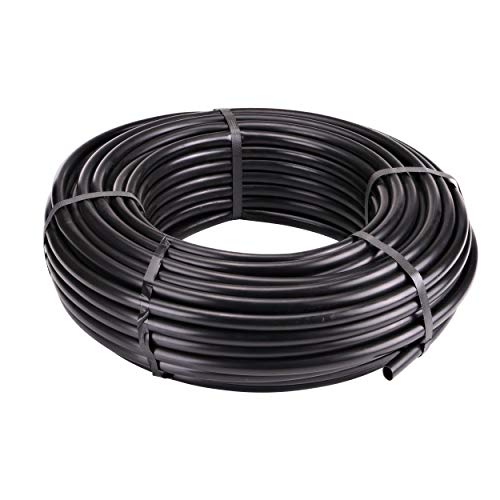
Raindrip’s 1/2-inch tubing serves as a robust main or feeder line for a wide range of irrigation setups. It allows direct insertion of emitters along the tubing for drip delivery and connects to water sources or as part of a larger main line network. This versatility supports irrigation across trees, shrubs, flower beds, groundcover, vegetable gardens, pots, and hanging baskets, offering flexibility in placement and scale of the system.
Hourleey 50 Feet Blank Distribution Tubing

Hourleey’s 50-foot blank distribution tubing is built for high flexibility and durability with PVC construction. It’s designed to resist cracking and maintain performance under repeated bending, making it suitable for automatic plant watering systems, greenhouse setups, or misting cooling systems. The tubing is compatible with standard 1/4″ barbed fittings, facilitating quick integration into existing drip irrigation networks and reducing installation time.
Buying Guide: Key Purchase Considerations
- Tubing size and compatibility: Most drip systems use 1/4″ or 1/2″ tubing for main lines and emitters. Ensure your tubing matches your fittings and emitters to prevent leaks and pressure loss.
- Material and chemical resistance: Look for PVC or polyethylene options that resist fertilizers, minerals, and sunlight exposure. UV-stable materials extend the life of outdoor installations.
- Length and layout needs: Assess the irrigation area and plan for sufficient length to reach all plant zones. Flexible tubing reduces the need for excessive fittings and elbows.
- Emitter spacing and flow rate: If using emitter lines, consider spacing (e.g., 6-inch spacing) and emitter flow rates to achieve even moisture distribution across beds and containers.
- Durability and weather tolerance: Outdoor tubing should withstand temperature swings and potential ground movement. Buried installations benefit from durable, puncture-resistant materials.
- Ease of installation: Textured finishes and compatible fittings speed up assembly. Pre-inserted emitters or easy-connect fittings minimize setup time.
- Maintenance and accessibility: Choose tubing that allows easy access for cleaning, repair, or reconfiguration as plant layouts change seasonally.
- Brand and availability: Popular brands with wide compatibility and readily available replacement parts reduce long-term maintenance costs.
In summary, the best tubing for drip irrigation combines flexibility, durability, and compatibility with common fittings and emitters. For small to medium home landscapes, 1/4″ distribution tubing paired with 6-inch emitter spacing can provide reliable, uniform watering, while larger layouts may benefit from thicker main lines and more robust tubing solutions. Consider your climate, garden layout, and maintenance preferences when selecting the final tubing in your drip system.