Grow a thriving garden by inviting beneficial pollinators with purpose-built bee houses. This guide highlights top options that attract solitary bees and other helpful insects, boosting pollination, plant health, and biodiversity in American lawns and gardens. Each choice below aligns with durable construction, easy installation, and habitat variety to support year-round pollinator activity.
The following quick reference table compares five selected bee houses, focusing on material, suitability, mounting options, and key benefits. Use it to narrow down your choice before diving into detailed product sections.
| Product | Material / Build | Mounting | Pollinator Focus | Notes |
|---|---|---|---|---|
| Nature’s Way PWH1-C Teal Bee House | Wood with hollow tubes | Easy-mount hanger | Mason bees, solitary pollinators | Colorful, practical entry option |
| POLLIBEE Mason Bee House Wax Coated | Wax-coated wood | Wall or tree mounting | Mason bees, solitary pollinators | Weather-resistant protection |
| Nature’s Way PWH1-B Purple Bee House | Wood with bamboo-like tubes | Wall or stake mounting | Solitary pollinators including mason bees | Eco-friendly design option |
| Lulu Home Wooden Insect House | Natural wood with varied compartments | Stake or hanging | Bees, butterflies, ladybugs | Multi-habitat attractor for biodiversity |
| Predimeza Wooden Insect Hotel | Paulownia wood with metal roof | Ground stake or wall hanging | Solitary bees, butterflies, ladybugs | Versatile, durable multi-chamber design |
Nature’s Way PWH1-C Teal Bee House

The Nature’s Way PWH1-C Teal Bee House is designed to attract gentle solitary bees that can dramatically increase pollination efficiency in gardens. Constructed to support diverse nesting preferences, this house helps pollinators thrive in yard landscapes, urban gardens, and small orchards. Its simple mounting option makes installation straightforward on a fence, shed, or tree. With multiple hollow tubes, the design accommodates a range of pollinator species, promoting a healthy and resilient garden ecosystem.
Key benefits include improved pollination, potential increases in fruit and flower production, and reduced need for chemical interventions due to a stronger pollinator presence. The teal color adds visual appeal while standing up to outdoor conditions. Periodic cleaning and tube replacement help sustain habitat quality over time. This option is well-suited for beginners seeking a reliable entry point into habitat gardening and pollinator stewardship.
POLLIBEE Mason Bee House

This handmade natural wooden bee hive is coated with wax to repel rain and extend service life, making it a durable home for mason bees. The assembled design simplifies setup, and a stainless steel screw clasp on the back allows secure hanging on a tree or wall. Mason bees are efficient pollinators, and this house aims to enhance pollination in gardens and orchards by providing a stable nesting site for this peaceful pollinator group.
Constructed for long-lasting performance, the wax coating protects against weather while maintaining a natural appearance. The product’s emphasis on masonry bee attraction aligns with gardeners seeking targeted pollinator support. Mounting versatility and straightforward maintenance make this option practical for various garden layouts. Regular inspection can help ensure the nesting tubes remain accessible and clean for returning bees.
Nature’s Way PWH1-B Purple Bee House

Nature’s Way presents a purple bee house designed to attract solitary pollinators with a focus on mason bees and related species. The hollow tubes of varying diameters create microhabitats that accommodate different bees, fostering biodiversity within the garden ecosystem. By hosting a diverse pollinator community, gardeners can experience enhanced flower, fruit, and berry production while supporting overall ecological balance.
The purple color offers aesthetic value in addition to function, helping to blend with garden plantings and decorative elements. Maintenance is straightforward: monitor for obstruction in tubes and provide occasional cleaning to prevent mold or debris buildup. This option suits gardeners seeking a colorful, purpose-driven pollinator habitat that emphasizes long-term ecological benefits.
Lulu Home Wooden Insect House

The Lulu Home insect house blends natural wood construction with varied compartments to accommodate multiple beneficial insects, including mason bees, solitary bees, butterflies, ladybugs, and lacewings. A weather-resistant roof and non-toxic coating protect the interior materials from rain and sun, extending the habitat’s life in outdoor spaces. This multi-habitat design supports pollination and pest control, contributing to healthier garden ecosystems.
Installation options include staking, hanging, or mounting on a wall, allowing flexible placement near flowering plants, vegetables, and fruit trees. The diverse internal chambers encourage nesting and overwintering, creating a reliable shelter for beneficial insects across seasons. Regular checks help ensure materials remain intact and safe for inhabitants, while positioning near bloom-rich areas can maximize pollination benefits.
POLLIBEE Mason Bee House Wax Coated
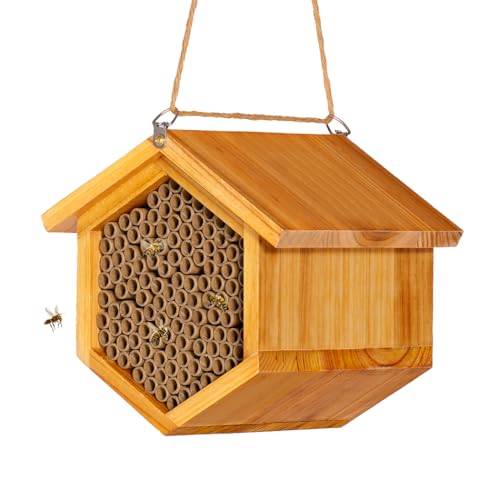
This wax-coated, natural wooden mason bee house is designed for long service life and rain protection. It arrives assembled and ready to hang, with a back stainless steel screw clasp for secure mounting. The focus is on attracting mason bees to boost pollination in gardens and orchards, supporting plant growth and fruit production. The wax coating helps preserve the wood’s integrity through varying weather conditions while maintaining a natural appearance.
Beneficial for gardeners prioritizing durable, low-maintenance pollinator habitat, this house provides a sturdy nesting environment that can withstand harsher climates. Regular tube inspection and occasional cleaning can help maintain nesting site health and encourage repeated occupancy by mason bees year after year.
Mason Bee House Native Bee Hive Hexagon

The hexagon-shaped mason bee house is crafted from solid pine wood and includes about 90 nesting tubes along with hanging rope and a metal wall buckle. It is designed to attract mason bees and provide a safe, accessible nesting site to enhance garden productivity. The hexagonal form offers a robust, eye-catching habitat while maximizing tube capacity for nesting.
Designed for easy mounting and long-term use, this bee hotel emphasizes dry tubes and durable construction to promote healthy pollinator populations. Gardeners can expect improved pollination and fruit set, particularly when combined with flowering plantings that align with mason bee activity periods. Regular maintenance ensures the nesting tubes remain dry and accessible for returning bees.
Predimeza Wooden Butterfly House & Bee House
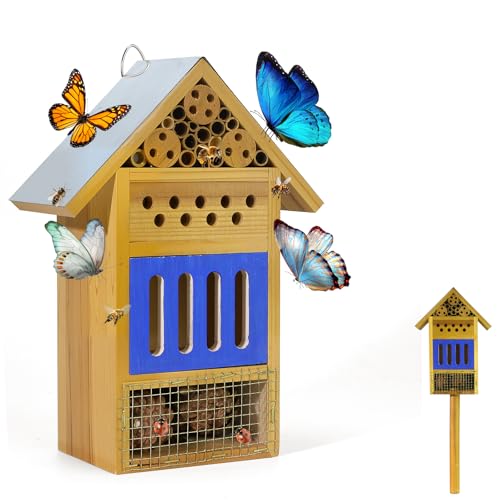
The Predimeza wooden insect hotel is crafted from paulownia wood and features a reinforced metal roof for weather resistance. It offers a multi-chamber habitat with bamboo tubes, pine cones, and logs to attract solitary bees, butterflies, ladybugs, and other beneficial insects. The design supports year-round outdoor use and flexible display options with a top hook and wooden stake, enabling ground placement or hanging from branches.
As a versatile insect habitat, this unit addresses multiple garden roles: pollinator support, natural pest control, and aesthetic enhancement. Regular checks help ensure the interior remains clean and accessible for visitors, while strategic placement near flowering plantings improves the likelihood of sustained pollinator visits across growing seasons.
Buying Guide: Key Purchase Considerations and Comparisons
When selecting a bee house or insect hotel, gardeners should weigh habitat type, durability, and maintenance requirements against local climate and yard layout. Consider these factors to tailor choices to your garden’s needs and pollination goals.
- Habitat focus: If your priority is mason bees, seek wax-coated or hollow-tube designs that suit their nesting preferences. For broader biodiversity, multi-chamber houses that accommodate various species can be more effective.
- Materials and weather resistance: Wood with protective coatings tends to endure the elements longer in outdoor spaces. Wax coatings, metal roofs, and weatherproof finishes reduce maintenance and replacement frequency.
- Mounting options: Ensure the unit can be securely mounted away from prevailing winds and excessive moisture. Hanging on a sturdy eave or wall, or staking near flowering borders, promotes accessibility for pollinators.
- Tube diameter variety: Tubes of different diameters support a diverse pollinator mix. A range helps accommodate mason bees, leafcutter bees, and other solitary pollinators.
- Maintenance needs: Regular cleaning of nesting tubes and replacement of damaged components improves occupancy rates and reduces disease risk among nesting insects.
- Placement strategy: Position near nectar-rich plants and within sight of open sunny areas to maximize pollinator activity and garden yield. Avoid placing near pesticides or heavily shaded zones.
- Aesthetic integration: Colorful or visually pleasing designs can enhance garden appeal while remaining functional habitats for beneficial insects.
In sum, the best bee house for a given garden depends on desired pollinator diversity, climate suitability, and ease of installation. For beginners, a ready-to-hang option with wax protection and varied tubes offers a straightforward start. For experienced pollinator gardeners, multi-chamber or hexagonal designs may provide broader ecological benefits and higher occupancy rates across seasons.